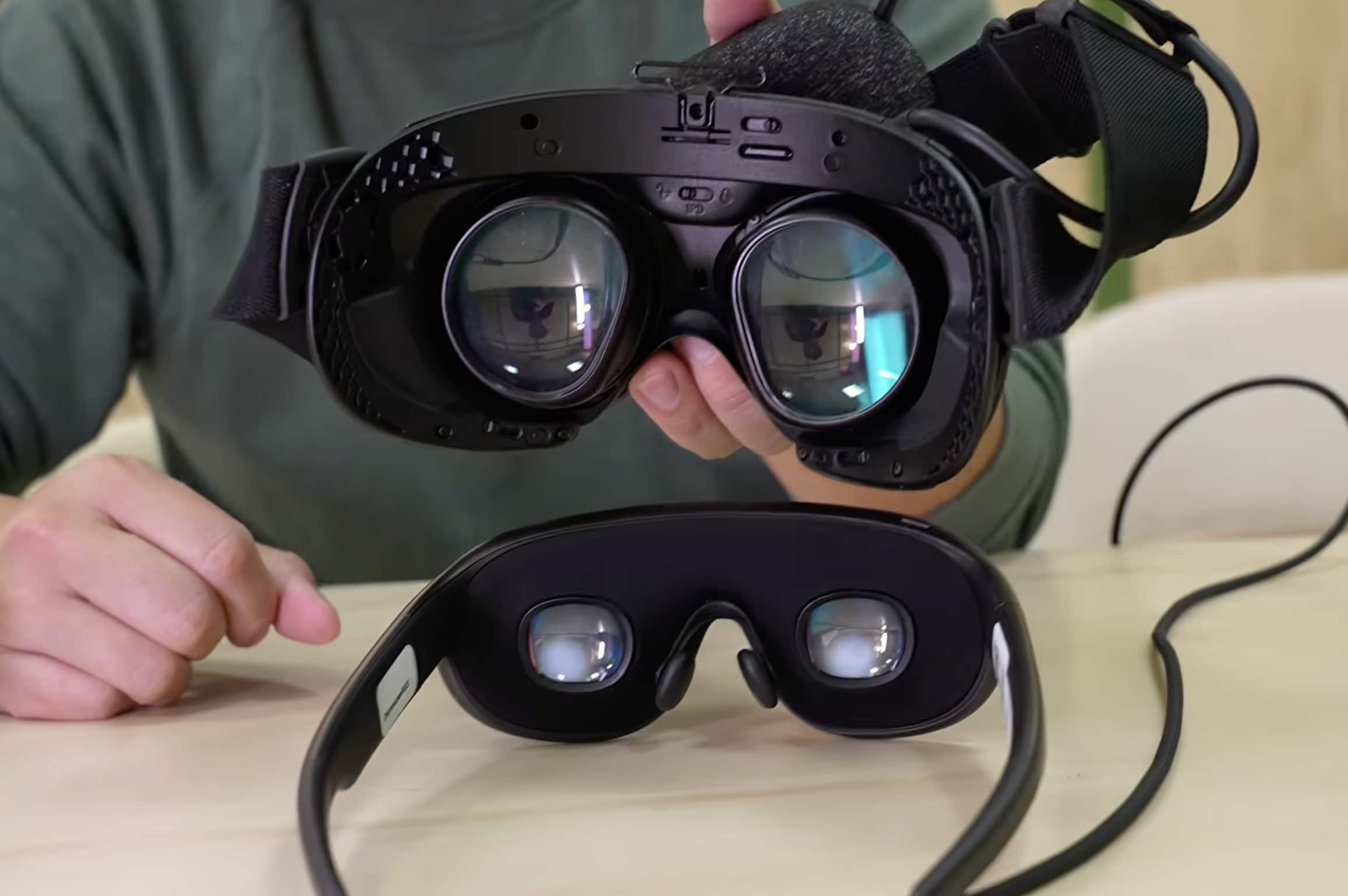
Meta VR Glasses vs URXR One: $1,299 Standalone vs $999 Modular
Virtual reality continues to develop, and Meta VR Glasses and URXR One illustrate two distinct approaches to spatial computing. As explored by Tech & Geek, both combine high-resolution micro-OLED displays, six degrees of freedom (6DoF) tracking and colour pass-through. Their biggest difference, however, is how they divide the work between the glasses and the hardware powering them.
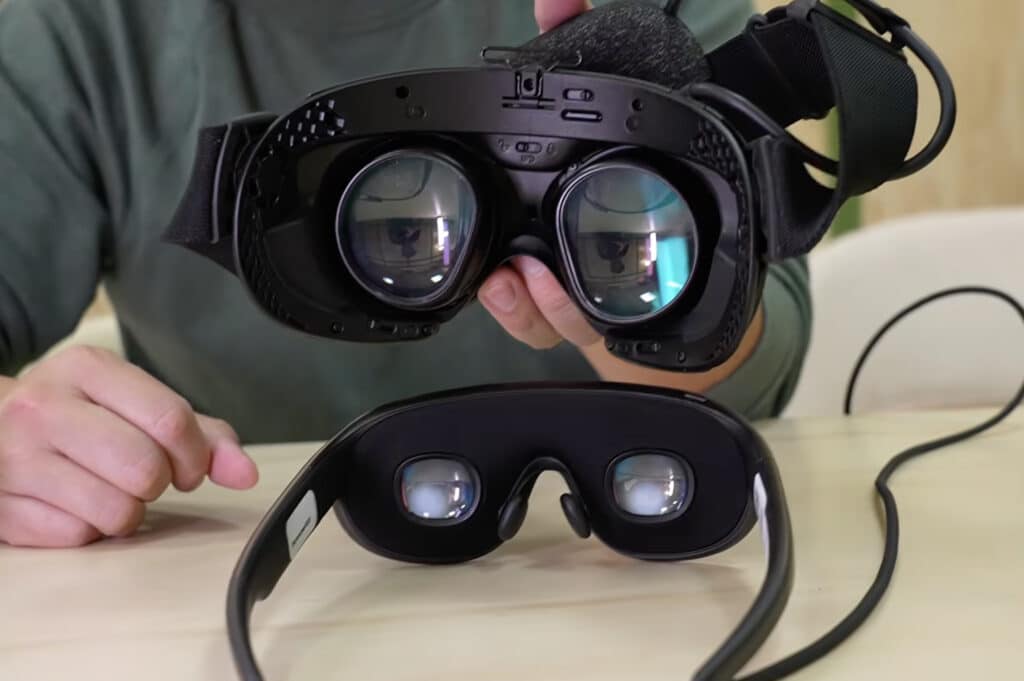
Meta VR Glasses vs URXR One. (YouTube)
Meta VR Glasses use a dedicated compute puck, creating a system that operates independently of a smartphone or laptop. URXR One takes a modular approach, connecting to existing devices for applications and content while handling spatial tracking on the glasses themselves.
That distinction influences everything from portability and accessories to software and overall cost. The comparison below examines how their designs suit different needs, including immersive gaming, virtual workspaces and media viewing.
Design Philosophy: Standalone vs Modular
Key Takeaways
- Meta VR Glasses pair lightweight eyewear with a dedicated compute puck, while URXR One connects to compatible external devices.
- URXR One weighs 93 grams. Meta’s glasses weigh around 100 grams, with a separate compute puck reported at 300 grams.
- The listed display specifications give Meta a faster 120Hz refresh rate, while URXR One offers a wider horizontal field of view.
- Meta includes integrated audio and access to the Quest ecosystem. URXR One requires separate audio equipment and uses companion software for its spatial features.
- Meta has announced a price of $1,299.99. URXR One’s website currently lists $999, replacing the $899 figure used in the original comparison.
The central difference is the role each product plays within a wider computing setup.
Meta VR Glasses: The processor, battery and storage sit in a separate compute puck. Together, the glasses and puck form a self-contained system, removing the need for a separate phone or computer to run supported experiences. “Standalone” therefore describes the complete package, rather than the glasses operating alone.
URXR One: These glasses act as a spatial display for compatible laptops, smartphones and other devices. The connected hardware supplies applications and content, while an onboard spatial processor handles tracking and related functions.
Meta’s approach supplies a dedicated computing platform. URXR’s design centres on extending the hardware users already own.
Weight and Portability: Balancing Features and Mobility
Both products aim to reduce the weight worn on the face, although their complete setups differ.
URXR One: At 93 grams, the glasses keep weight down by leaving out an internal battery and built-in speakers. Power comes from the connected setup, with a Power Hub needed for certain device combinations. Their portability is particularly appealing when paired with hardware the user already carries.
Meta VR Glasses: The glasses weigh around 100 grams, alongside a separate compute puck reported at 300 grams. Moving the computing components away from the face keeps the eyewear light while providing dedicated processing and battery capacity.
The seven-gram difference between the glasses tells only part of the story. A practical comparison also needs to account for Meta’s puck and whichever host device, power accessories and audio equipment accompany URXR One.
Watch Tech & Geek’s comparison on YouTube.
Display and Field of View: Resolution vs Immersion
Both devices use high-resolution micro-OLED displays, with different balances between pixel count, refresh rate and viewing area.
URXR One: The listed resolution is 2448 × 2064 pixels per eye, with approximately 36 pixels per degree (PPD) and a 90Hz refresh rate. The comparison gives its field of view as 90° diagonally, covering 80° horizontally and 57° vertically. This configuration is aimed at detailed virtual displays and media viewing.
Meta VR Glasses: The specifications cited in the comparison are 2412 × 2288 pixels per eye, 37 PPD and a 120Hz refresh rate. The stated field of view is 70° horizontally and 66° vertically.
These figures give Meta a slightly higher total pixel count per eye and a faster refresh rate. URXR provides more horizontal coverage, while Meta offers more vertical coverage.
Neither set of numbers establishes an outright winner. Text readability, perceived sharpness and immersion also depend on how the displays and optics work together. The specifications indicate different priorities rather than guaranteeing a better experience for every user.
Pass-Through and Tracking: Connecting Virtual and Physical Spaces
Both products use cameras to show the surrounding environment and support 6DoF tracking, allowing the system to respond to changes in head position and orientation.
URXR One: The manufacturer currently lists video pass-through at 2328 × 1728 and 90 frames per second, with latency below 10 milliseconds. These are manufacturer specifications rather than independent performance measurements. Its onboard spatial processor handles tracking, see-through and reprojection.
Meta VR Glasses: Colour pass-through and spatial tracking are part of the announced experience, although the supplied comparison does not provide equivalent resolution or latency figures.
URXR’s published figures offer more detail for this particular comparison. They do not, by themselves, demonstrate better real-world performance. A direct assessment would need to consider image quality, tracking stability and responsiveness under comparable conditions.
Audio and Accessories: Lightweight vs Integrated
Audio provides another distinction between the two designs.
URXR One: There are no built-in speakers, so users need headphones, earbuds or another audio source. This helps keep the glasses lightweight, although it adds another item to the setup for films, games and other experiences that depend on sound.
Meta VR Glasses: Integrated audio reduces the need for separate listening equipment. That suits the product’s aim of providing a more complete entertainment and spatial computing package.
The choice depends partly on existing habits. Users who already prefer their own headphones may find URXR’s approach convenient enough. Those who want fewer separate accessories may prefer Meta’s integrated arrangement.
Software and Ecosystem: Established Platform vs Modular Flexibility
Hardware specifications are only one part of the experience. The software available—and how it runs—also shapes what users can do.
Meta VR Glasses: The announced platform draws on the Quest ecosystem, with games, applications, hand tracking and a dedicated operating system. That gives Meta an established software foundation for entertainment and productivity, although buyers should check support for the particular applications and input methods they want.
URXR One: Companion software provides spatial displays and virtual environments around content from connected devices. Its appeal lies in bringing existing workflows into a wearable display, rather than offering an equivalent standalone VR application library.
Meta’s strength is its dedicated platform. URXR’s is its relationship with existing hardware and software. Compatibility and feature availability remain important when deciding whether either approach fits a particular workflow.
Use Cases: Productivity vs Immersion
The devices overlap in several areas, but their designs suggest different priorities.
URXR One: The lightweight display approach is well suited to people interested in virtual workspaces, media viewing and larger screens for compatible devices. For users who already own suitable hardware, it offers a way to extend that setup without buying another dedicated application-processing platform.
Meta VR Glasses: The glasses-and-puck arrangement is intended for users seeking a more self-contained spatial computing experience. Integrated audio and the Quest software foundation support its focus on entertainment, gaming and virtual workspaces.
These are differences in emphasis rather than strict boundaries. URXR can display games from connected hardware, and Meta’s ambitions extend beyond gaming. The more useful question is whether the user wants to expand an existing device or adopt a dedicated platform.
Pricing and Availability: Cost vs Features
The headline prices reflect those different approaches, although the original comparison’s URXR figure needs updating.
Meta VR Glasses: Meta has announced a price of $1,299.99 and a spring 2027 release. The package combines the glasses with dedicated computing hardware, positioning it as a more complete spatial computing system.
URXR One: The original article cited an expected retail price of $899. The manufacturer’s website now lists $999. Its crowdfunding campaign has ended, with a late-pledge option advertised on the site.
The current listed difference is approximately $301. However, the total cost depends on what the buyer already owns and which accessories are required. URXR’s lower device price is most relevant to users who already have a compatible host and suitable audio equipment.
Crowdfunding Considerations: Risks and Expectations
URXR One’s crowdfunding background deserves consideration alongside its specifications and price. Buyers should distinguish between advertised capabilities, delivery expectations and the performance of final production hardware.
A lower entry price can be attractive, but it does not remove uncertainty around fulfilment, software development or compatibility. Checking the latest campaign updates and the requirements of the intended setup is therefore part of evaluating the product.
Meta brings an established hardware and software ecosystem, but its new glasses are also a forthcoming product. Experience with earlier Quest devices provides context; it does not substitute for evaluating the finished glasses.
For both products, announced features should be distinguished from independently tested results.
Two Paths in Spatial Computing
Meta VR Glasses and URXR One approach lightweight spatial computing from different directions.
Meta VR Glasses: A dedicated glasses-and-puck system, integrated audio and an established software platform make this the more self-contained proposition. Its appeal centres on combining entertainment, gaming and productivity within one supported environment.
URXR One: A lightweight display that connects to existing hardware offers a more modular route. Its attraction is strongest for people who want virtual screens and media experiences built around devices they already use.
The decision ultimately rests on the complete setup. Meta asks buyers to adopt a dedicated platform; URXR asks them to bring compatible computing hardware. Price, software requirements, accessories and intended use will determine which arrangement makes more sense.