‘RAMageddon’: Tech crunch hikes the price of your next iPhone by $100
For years, consumers could generally count on one thing when it came to technology: yesterday’s premium features would eventually become tomorrow’s affordable ones. Phones became faster, storage increased and components improved, while older models tended to fall in price.
Shutterstock
That familiar pattern is now being disrupted.
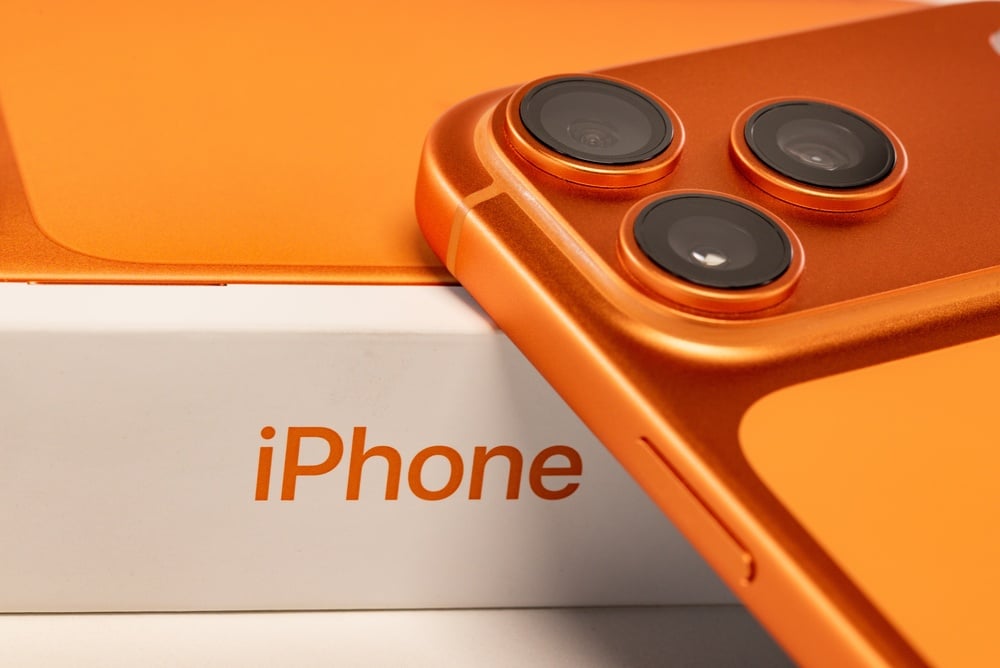
Apple’s latest product launch made headlines around the world after the company revealed its first foldable phone. But amid the polished technology showcase was an unwelcome surprise: a £100 rise in the price of every iPhone, including older models.
The increase is being blamed on “RAMageddon”, a shortage that has disrupted the decades-long trend of consumer electronics gradually becoming cheaper. It is one consequence of the AI gold rush, which is consuming enormous quantities of memory chips for the vast datacentres needed to power artificial intelligence.
The result is that a technology boom taking place largely out of sight, inside warehouses packed with servers and computing equipment, is beginning to make itself felt in something much more familiar: the price of a new phone, laptop or games console.
The surge in demand has created a serious shortage of memory chips and other essential electronic components used across consumer devices.
That squeeze has pushed costs sharply higher, with some chips now costing five times more than their previously listed prices. As a result, many of the everyday electronic products consumers depend on have suddenly become significantly more expensive to manufacture, with those extra costs being passed on to buyers.
“Two things are happening at once,” says Francisco Jeronimo, the vice-president of client devices at research company IDC. “Component costs have risen sharply, with memory alone up more than 300% year on year.”
Because older iPhones rely on the same costly memory components as newer models, Apple is effectively having to price them as current products, he adds.
Black on the iPhone 18 Pro Max looks incredible! 🔥 https://t.co/j4sZsTG1mK
— Apple Hub (@theapplehub) September 18, 2026
Why an older iPhone is no longer necessarily the cheaper option
Normally, buyers who do not need the latest features can save money by choosing an older handset. Once a new generation arrives, previous models typically become the more affordable route into the same product family.
The current component crunch is complicating that logic.
The iPhone is far from the first device to receive a “RAMageddon” price rise, but it is the world’s single biggest-selling electrical product. For many consumers, that means the tangible cost of the AI spending boom could amount to an extra £100 without receiving anything additional for their money.
That is what makes the current round of increases particularly noticeable. Consumers are accustomed to paying more for a faster processor, better camera or larger screen. Paying more for essentially the same device is a harder proposition.
Other smartphone manufacturers have also raised the cost of their latest models, with Samsung and Google adding as much as £80 to the prices of their flagship phones.
Apple has also raised prices across its refurbished range by between £60 and £70, including for the older iPhone 15, which is no longer available new in shops. So far, however, figures from Uswitch suggest those higher costs have not spread to the third-party refurbished iPhone market.
“A refurbished iPhone 16 has held at about £503 all summer, roughly where it was before the 18 Pro launch,” says Ernest Doku, a Uswitch mobiles expert. “A refurbished 14 is about £10 cheaper than it was in June, while the 16 has simply stopped falling in price.”
For shoppers, that creates an unusual market. Some used and refurbished devices are still holding relatively steady while manufacturers themselves face much greater pressure from the cost of components.
That may give buyers another reason to look beyond brand-new phones, although the wider trend suggests that cheaper options are becoming harder for manufacturers to sustain.
The cheaper end of the smartphone market is being squeezed
Most smartphone manufacturers apart from Apple have stopped selling older models that were no longer financially viable and would probably struggle to attract buyers at higher prices.
The consequences have been especially noticeable at the cheaper end of the smartphone market, where manufacturers have less room to absorb sudden increases in component costs without changing what consumers pay.
That matters because price rises do not affect every buyer in the same way. Someone shopping for the newest flagship may already expect to spend heavily. Someone deliberately choosing an older or lower-cost device is far more likely to notice when the normal savings begin to disappear.
NO lines for the iPhone 18 Pro in Bangkok.
Walk into the Apple Store, order an iPhone 18 Pro or Pro Max, and pick it up in under 30 minutes.
Launch-week iPhone demand looking very different this year?? https://t.co/Ly5XvXnLW5
— Yogesh Brar (@heyitsyogesh) September 18, 2026
In its latest forecast, IDC predicts that worldwide smartphone sales will suffer their steepest annual contraction on record this year, falling by almost 17% to just over 1bn handsets.
“People are buying fewer phones and paying considerably more for those they do buy,” Jeronimo says.
That combination could reshape buying habits. Rather than upgrading automatically when a contract ends or a new model arrives, more consumers may decide that the phone already in their pocket is good enough for another year.
The problem goes far beyond smartphones
The price increases have been even greater elsewhere in consumer electronics.
Computer manufacturers are particularly vulnerable to rapidly increasing memory and chip costs and have already been forced to raise prices several times over the past 18 months.
That exposure makes sense. Modern laptops and desktop computers depend heavily on the very components now in shortest supply, meaning even relatively modest changes further up the supply chain can become significant by the time a finished machine reaches a shop.
Microsoft added as much as £220 to the price of some Surface computers while also introducing versions with half the memory in an effort to keep costs under control.
The change has pushed the company to try to redesign Windows so it can run more comfortably with just 8GB of RAM, something it has struggled to do for several years.
It is a revealing example of how manufacturers are responding. If the cost of producing the same machine rises too sharply, there are only so many options: charge more, accept lower margins or change the product itself.
In some cases, consumers may therefore find themselves paying more. In others, they may be offered devices with less memory or different specifications as manufacturers try to keep headline prices within reach.
Many of PC manufacturer Dell’s premium laptops have increased in price by as much as 25%, while repairable laptop manufacturer Framework has repeatedly had to adjust its prices as component costs continue to fluctuate.
Apple has not escaped the increases either. It added £100 to its lower-cost MacBook Neo, alongside price rises across most of its Mac and iPad ranges in June.
“We have never seen a component price increase this much, this quickly,” the company says in a statement.
Even ageing games consoles are getting more expensive
Games consoles have also been affected.
Normally, the economics of an ageing console move in the opposite direction. Manufacturing becomes more established, the technology becomes older and companies have an incentive to attract more people into the platform.
Yet the current market has produced the unusual sight of an established machine becoming substantially more expensive years after its debut.
In a rare development, Microsoft recently raised the price of its almost six-year-old console to £670, compared with its original launch price of £449.
“Console storage and memory prices have increased by more than 2.5 times, and we expect another doubling by the autumn of 2027,” the company says.
The increase illustrates why the issue is bigger than any one manufacturer or device. Smartphones, computers and consoles may look very different to the buyer, but behind the casing they depend on many of the same types of components.
When those components suddenly become more expensive, the effects can spread remarkably quickly across the technology people use every day.
The AI boom has a consumer price tag
The AI boom is often discussed in terms of software: chatbots, image generators, workplace tools and the increasingly capable systems appearing in search engines and apps.
But all of that software requires physical infrastructure.
The race to build AI capacity has driven huge demand for datacentres and the hardware inside them. As technology companies compete for components, consumer electronics manufacturers find themselves operating in the same increasingly expensive market.
For someone buying an iPhone, that connection is easy to miss. There is no obvious AI datacentre visible when the price on a phone rises by £100.
Yet that is one of the striking features of “RAMageddon”. Competition for the hardware behind one technological revolution is affecting the cost of products that have been familiar for years.
Consumers may therefore end up contributing to the cost of the AI boom even if they are not particularly interested in AI themselves.
And prices may not simply fall again
Unfortunately for consumers, the additional £100 being added to the cost of a smartphone could be only the beginning.
Major memory producers, including SK Hynix, have suggested the shortages may continue beyond 2030.
Jeronimo says memory prices are likely to keep rising well into 2027, even if the pace of the increases has slowed compared with the “extraordinary spikes” recorded earlier this year.
The more difficult question is what happens when the immediate shortage eventually begins to ease.
A fall in component costs does not automatically mean the price displayed in shops will return to where it started.
“Even once memory costs ease, I do not expect smartphone prices to fall back to the same levels as last year.
“Increases in this industry tend to be sticky. Once customers have absorbed a higher price and manufacturers have rebuilt their margins, companies hold the line and add value through storage or features, rather than cutting the ticket price.”
That could represent the more lasting consequence of the current crunch. A temporary component shortage can be resolved. A new consumer expectation about what a phone, laptop or console costs is much harder to reverse.
Manufacturers may eventually have more room to improve specifications again, but that does not necessarily mean the headline price will retreat with them.
For consumers accustomed to technology steadily delivering more for less, that amounts to a significant change.
“The era of cheap smartphones – or any device to be honest – is over,” Jeronimo says.