iPhone Duo Review: Apple’s Foldable Phone Changes How We Think About Smartphones
Whenever I board a flight for a vacation, I’m reminded of just how useful my iPad can be. Its spacious, vibrant display makes watching films, reading books and enjoying comics much more pleasant than doing the same things on a phone.
Once I’m back home, however, the tablet usually disappears into a drawer. My laptop handles most of my work, while my iPhone takes care of everything else. It’s only when I’m riding public transportation or have some unexpected downtime that I find myself wishing I’d brought the iPad along.
That occasional frustration gets to the heart of Apple’s new $2,000 iPhone Duo, the company’s first foldable smartphone, which arrived on Friday. Whether it’s worth paying such a steep price depends largely on how often you want a tablet but don’t have the space or inclination to carry one.
First people to get the iPhone Duo from 5th Ave are out! 🔥 https://t.co/MsHLP9AIVh
— Apple Hub (@theapplehub) October 23, 2026
The Duo attempts to eliminate that dilemma. It combines a compact tablet and a conventional smartphone in one device, allowing you to unfold a larger display whenever you need it and fold everything back into something that fits in your pocket.
That makes its performance as a tablet more important than almost anything else. Features such as the camera and the smaller exterior display still matter, but they’re not necessarily the reasons anyone would spend $2,000 on this phone.
If you’re perfectly happy with a traditional smartphone and rarely wish for a larger screen, there’s little reason to rush into buying one. You may not be able to get your hands on it immediately anyway. Early demand has been exceptionally strong, with initial online inventory selling out shortly after orders opened. Customers placing orders on release day were already being given estimated delivery dates in 2027.
I spent a day trying the Duo before its official launch, concentrating on the activities for which I normally reach for an iPad. I watched movies, browsed photographs, read books and handled some everyday work.
My impression is that the Duo could be particularly appealing to frequent travelers, commuters, enthusiastic readers and anyone who regularly watches television on the move. People who primarily want a straightforward smartphone, however, may find its unusual shape and limitations harder to accept.
Here’s how it performed.
The iPhone Duo’s Strengths and Weaknesses
Apple
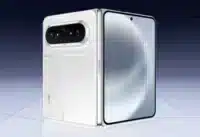
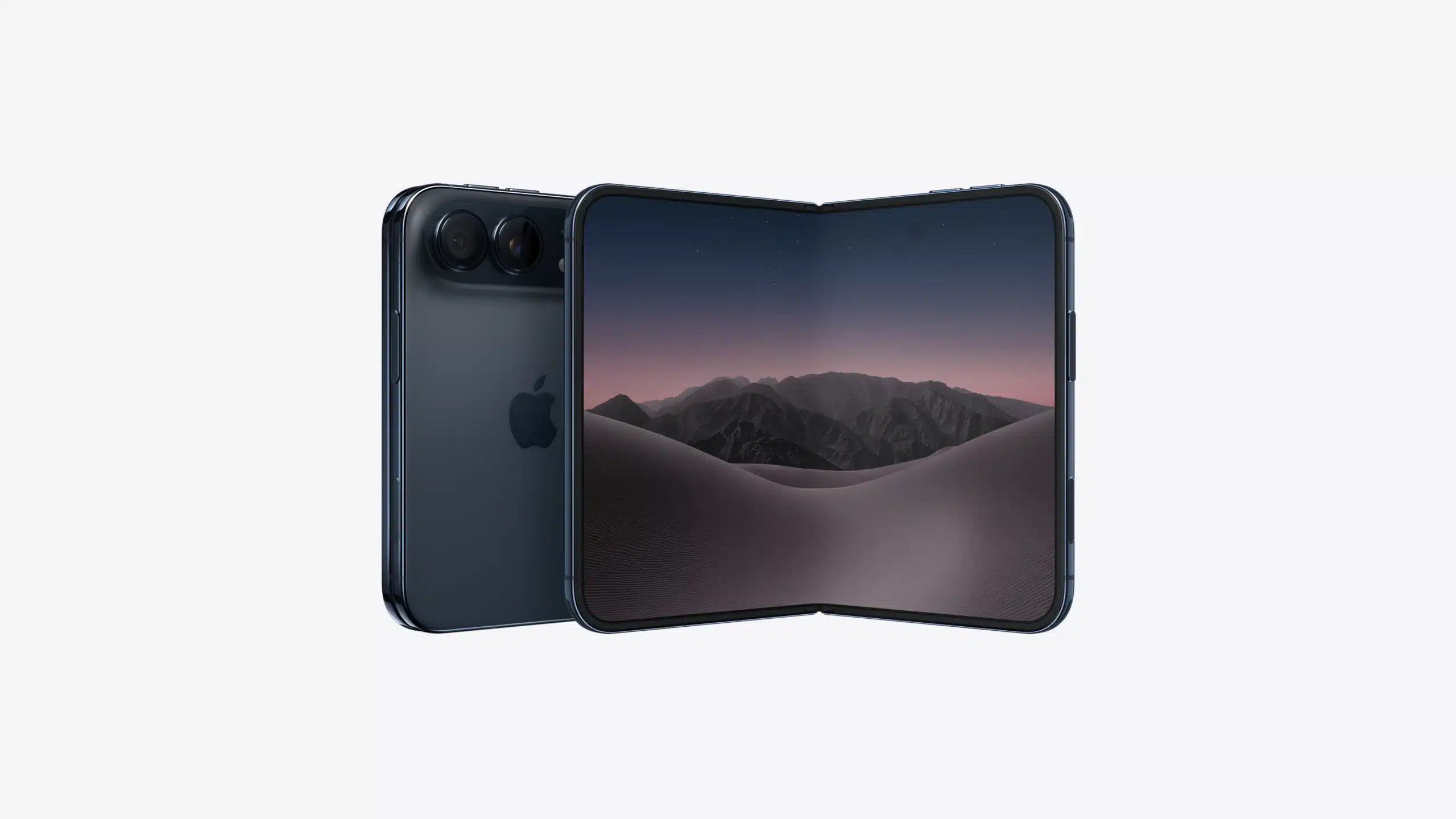
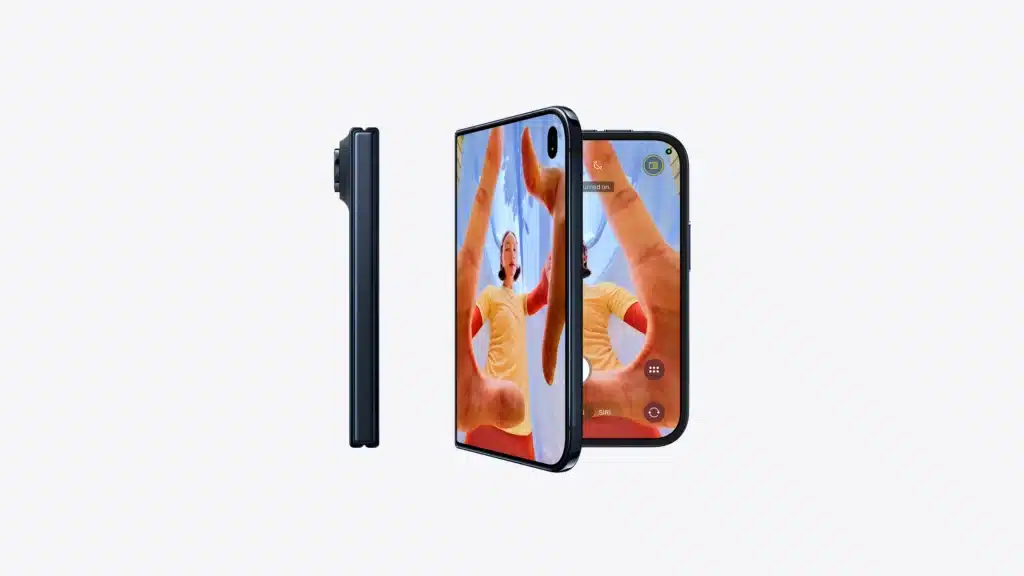
The Duo is designed around two distinct screen experiences. When closed, it offers a 5.4-inch exterior display that functions much like a conventional smartphone. Open the device, and a 7.6-inch internal display transforms it into something closer to a small tablet.
The concept is clever, but it introduces some of the same compromises that have followed foldable smartphones since they first appeared roughly eight years ago.
With the Duo closed, its narrow proportions give it an almost passport-like appearance. It looks appealingly small, but the experience of actually using it is less convincing.
The device feels relatively thick and squat in the hand, making ordinary one-handed tasks more troublesome than they should be. While composing a text message, I struggled to reach certain keys with my thumb. That’s not a problem I regularly encounter with a standard iPhone.
The camera system also falls short of what buyers might expect at this price. Unlike the $1,200 iPhone 18 Pro, the Duo lacks a dedicated telephoto lens, limiting its ability to capture distant subjects at higher optical magnification.
That omission didn’t bother me particularly, since the photographs I took still looked good. More irritating was the absence of Apple’s familiar facial recognition system. Instead of Face ID, the Duo uses a fingerprint reader built into a button along its side. Unlocking the phone took a little more effort and felt slower than the process I’ve become accustomed to.
These inconveniences are worth considering before spending twice as much as many conventional premium smartphones cost.
The Duo becomes far more persuasive, though, once you open it.
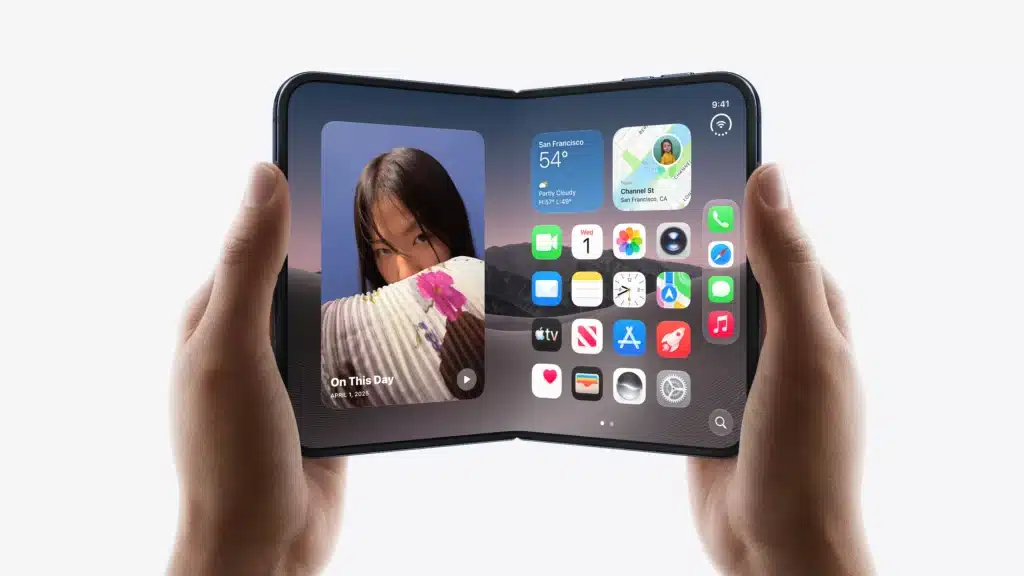
The internal display gives everyday activities considerably more breathing room. Watching videos feels more immersive, books are easier to enjoy, photos reveal details that might otherwise escape notice, and writing messages becomes surprisingly comfortable.
After owning and experimenting with numerous iPads over the years, I found the Duo’s combination of portability and screen space unusually useful. It’s not necessarily the most polished tablet Apple has produced, but it may be among the most interesting.
Watching Videos on the Duo
Apple
One of the first things I did after setting up the Duo was open Amazon Prime Video and start playing a selection of movies and television shows.
The experience depended heavily on the shape of the video.
An episode of “The Expanse,” for instance, filled much of the display and looked excellent. The larger screen made it easier to appreciate the show’s visual details without requiring a separate device.
Other films weren’t as well suited to the Duo’s proportions. Christopher Nolan’s “Memento,” presented in a widescreen format, appeared with substantial black borders. Those unused portions of the display made the viewing experience somewhat less impressive than I’d hoped.
Even with these limitations, watching video on the Duo was considerably more appealing than streaming the same material on my usual iPhone.
The extra screen space made a meaningful difference. I could imagine watching an entire episode of a television series on a train or catching up on a movie during a flight without feeling that the display was too small.
There was also a useful trick when I no longer wanted to hold the device.
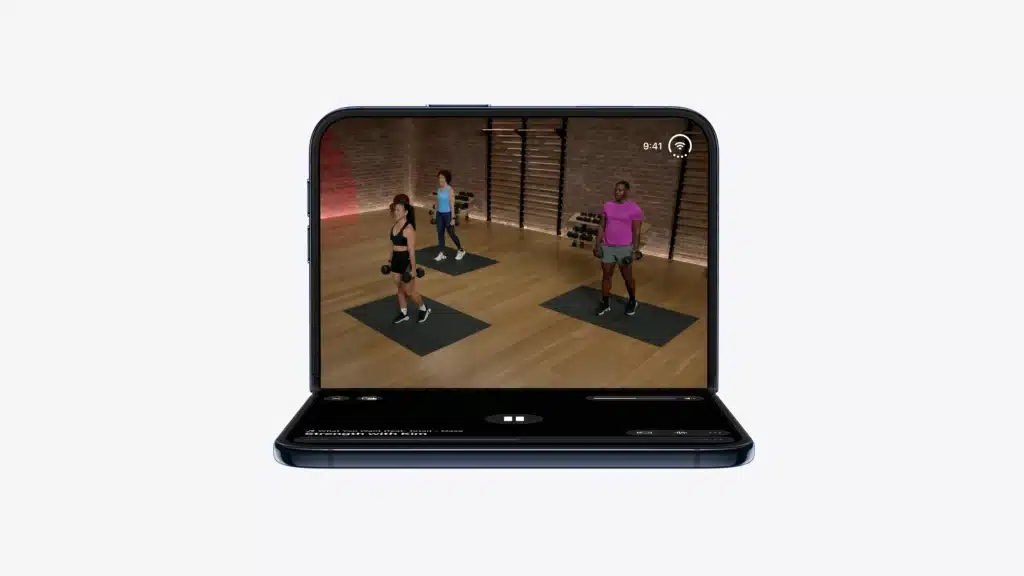
By folding the Duo to roughly a right angle and resting it on a flat surface, I could prop up the screen and continue watching without using my hands. The arrangement resembled a tiny laptop and worked particularly well for casual viewing.
It’s a small convenience, but one that demonstrates how a folding design can offer advantages beyond simply providing a bigger screen.
Looking Through Photos
Apple
Next, I opened Apple’s Photos app and began browsing pictures of my family, including my golden retriever, Homer, and my corgi, Max.
I’ve become so accustomed to looking through photographs on a smartphone that I’d almost forgotten the benefits of a larger display.
On the Duo, familiar pictures felt different. Faces, backgrounds and small details were easier to appreciate without constantly zooming in.
At one point, I noticed a tiny chip in one of Homer’s teeth that had escaped my attention when I’d previously viewed the same photo.
It’s hardly a revolutionary discovery, but it illustrates something important about the Duo’s design. A larger screen doesn’t necessarily change what a device can do. Sometimes it simply makes an ordinary activity significantly more enjoyable.
For anyone who frequently reviews family pictures, edits images or shares photo albums with friends, the internal display could become one of the Duo’s more useful features.
Reading Books and Comics
Reading proved to be another area where the Duo’s larger screen made a strong impression.
I’ve never particularly enjoyed reading lengthy books on my iPhone. The screen feels cramped, and I find myself constantly moving through short sections of text.
Opening an e-book on the Duo through Amazon’s Kindle app was a much more comfortable experience.
There was enough room to display text without making the page feel crowded, and the device was still small enough to carry conveniently.
Comic books and graphic novels were even more impressive.
Color illustrations looked sharp, and the generous display provided enough space to appreciate the artwork without continually enlarging individual panels. The screen’s matte-like finish also helped reduce distracting reflections from nearby light.
My dedicated Kindle would probably remain my first choice for longer reading sessions. Its simplicity and reading-focused design still have advantages.
But the Duo makes a persuasive argument for having an e-reader permanently available in your pocket.
That’s particularly appealing to someone who wants to develop a stronger reading habit. Rather than remembering to pack a separate device, you could open a book whenever you found yourself with a spare few minutes.
Over time, that convenience could make the larger screen more valuable than any individual hardware feature.
Can the iPhone Duo Handle Everyday Work?
Tablets have spent years trying to establish themselves as replacements for laptops, with mixed results.
They’re excellent for simple activities such as answering emails, reviewing documents and communicating with colleagues. More complicated tasks, however, are often easier with a proper keyboard and desktop operating system.
The Duo doesn’t fundamentally change that equation, but it handles lighter work quite well.
Apple’s Mail app was a particularly good example of how software can benefit from a folding display.
With the phone closed, the app showed a familiar list of messages on the smaller exterior screen. Opening the device changed the layout, placing the inbox on one side and the selected message on the other.
That arrangement made it easier to move between conversations and read longer emails without repeatedly navigating backward.
Typing was another unexpected highlight.
Larger iPads can be uncomfortable when held in both hands, especially when you’re trying to type using only your thumbs. The Duo’s narrower, more manageable dimensions made that approach much easier.
I could write emails and respond to Slack messages comfortably while holding the unfolded device. It felt more practical than attempting the same thing on a full-size tablet.
I wouldn’t want to write a lengthy report or manage a complex spreadsheet on the Duo, but that’s not really its purpose.
For responding to messages during a commute, checking information between meetings or handling quick administrative tasks while traveling, the larger display provides a useful middle ground between a smartphone and a laptop.
A Different Kind of Smartphone
Much of the early criticism surrounding the Duo has focused on its small exterior display.
That’s understandable. Most people have spent years using smartphones with relatively large, comfortable screens. Moving to a narrower, thicker device can feel like a step backward, particularly when performing familiar activities with one hand.
But judging the Duo primarily by its performance as a traditional smartphone overlooks what Apple is attempting to create.
This isn’t simply another iPhone with a different shape. It’s a device designed to spend a meaningful amount of time unfolded.
I suspect many owners will eventually use the larger display more frequently than they initially expect, particularly once they discover how much better certain activities feel with additional screen space.
There may even be an unexpected benefit to the smaller exterior screen.
Mindlessly scrolling through short videos and social media feeds isn’t especially comfortable on the Duo when closed. That could encourage users to open the device for more deliberate activities, such as reading, watching a longer program or getting some work done.
Of course, a larger display doesn’t automatically lead to better screen habits. But it’s interesting to consider how the physical design of a phone might influence the way people use it.
Over the past several years, I’ve tested numerous foldable smartphones, and my attitude toward them has gradually changed.
When the first models appeared, their expensive prices and practical weaknesses made them difficult to recommend. Flexible displays seemed more vulnerable to damage than conventional glass screens, while the folded devices could feel heavy and bulky.
Manufacturers including Samsung, Google and Motorola have since made meaningful progress. Their devices have become thinner, and their software has improved to accommodate different screen sizes and folding positions.
Those improvements have made the entire category more convincing.
I’ve also been particularly curious about Apple’s eventual entry into the market, largely because I prefer using iOS rather than Android.
The Duo isn’t perfect, but it shows why the concept has endured despite its shortcomings.
Bottom Line: Is the iPhone Duo Worth $2,000?
NEW VIDEO – iPhone Duo Review: It’s Real First Generation Fun! https://t.co/1jJt58zXN8 https://t.co/IEzUsiwELr
— Marques Brownlee (@MKBHD) October 21, 2026
The iPhone Duo is an intriguing first attempt from Apple, although it’s not necessarily a device I would buy for myself.
My daily routine doesn’t involve much time on trains or airplanes, and I generally try to limit how often I look at screens. Since I commute by motorcycle, the ability to unfold a tablet during my journey offers little practical benefit.
Someone who spends several hours each week traveling on public transportation might reach a very different conclusion.
For those users, having a tablet available without carrying an additional device could justify some of the Duo’s compromises. The larger display is genuinely enjoyable for reading, watching videos, browsing photographs and handling everyday communication.
The $2,000 price remains a substantial obstacle, especially given the awkward exterior screen, missing telephoto camera and less convenient fingerprint unlocking system.
Buyers should think carefully about whether they’d actually use the tablet functionality often enough to make those drawbacks worthwhile.
Still, the Duo has strengthened my belief that foldable phones have a future.
I remain attached to the familiar rectangular iPhone. Its straightforward design is comfortable, reliable and well suited to almost everything I need.
Yet I often wish it occupied less space in my pocket.
Perhaps the next major evolution won’t involve opening a phone into a larger tablet at all. Instead, it could mean taking the smartphone we already know and folding it into an even smaller, more portable square.
That possibility interests me just as much as the Duo itself.
For now, Apple’s first foldable offers something different: a glimpse of how smartphones might evolve from devices built around one screen size into products that adapt to whatever we’re trying to do.
It may be an imperfect beginning, but it’s an idea worth exploring.