NVIDIA Unveils ‘Superchip’ Bringing AI Power to Laptops and PCs
AI race moves from the data center to the desktop
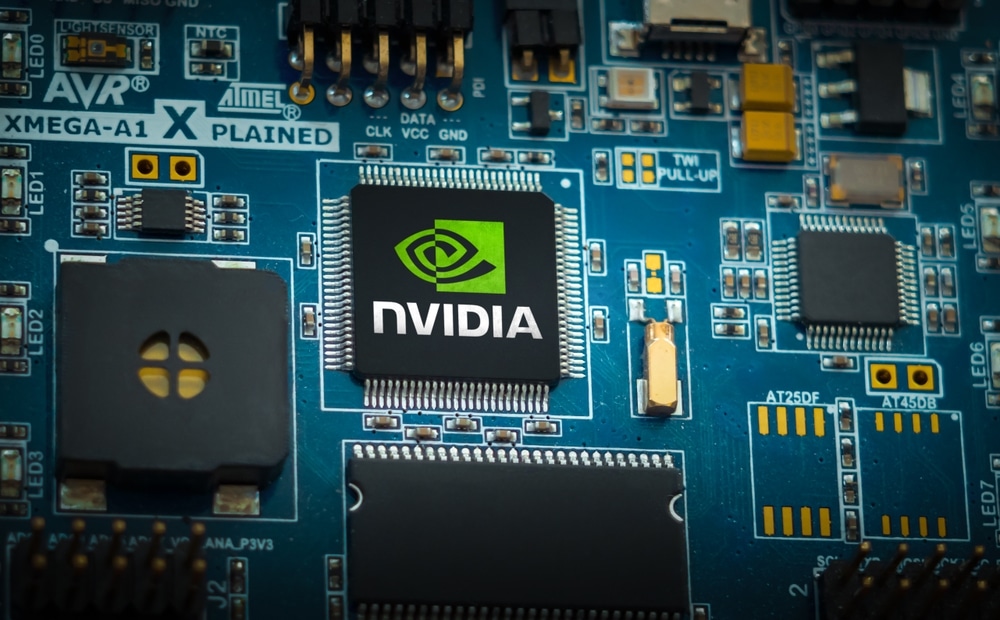
The battle to dominate artificial intelligence is entering a new phase, with chipmakers increasingly focused on bringing powerful AI capabilities directly to consumers. Having established itself as the leading supplier of hardware powering AI models in datacentres around the world, Nvidia is now targeting the personal computer market with technology it believes could fundamentally change how people interact with their devices.
A new front has emerged in the race for AI chip supremacy, after Nvidia said its latest innovation could change the way people interact with computers by replacing the mouse and keyboard.
The $5tn (£3.7tn) US chipmaker has introduced a “superchip” that embeds advanced AI capabilities into laptops and desktop PCs, setting up competition with Intel, Apple, Qualcomm, and AMD.
The RTX Spark chip is due to launch later this year and will be adopted by manufacturers including Dell, Lenovo, Asus, and HP, working alongside Microsoft’s Windows software, according to Nvidia’s chief executive, Jensen Huang.
Speaking at the Computex conference in Taiwan, Huang said the chip would “reinvent the PC” for the AI age following three years of joint development between Nvidia and Microsoft.
A new generation of AI-powered computers
Combining a central processor and graphics processor, and developed with assistance from Taiwan’s MediaTek, the chip is designed to run AI agents directly on devices rather than depending on cloud-based computing.
This shift could prove significant for consumers and businesses alike. Running AI locally can reduce latency, improve privacy, and allow users to access advanced AI tools without relying on a constant internet connection. NVIDIA believes this approach will make AI assistants more responsive and capable of handling increasingly complex tasks.
It will enable AI agents to navigate PCs autonomously, taking over tasks traditionally performed through mouse and keyboard inputs. NVIDIA said the chip’s performance would allow computers to remain slim and lightweight despite its capabilities.
Huang said Nvidia was reimagining the PC “for the first time in 40 years”.
The company’s expansion into consumer PCs opens up a fresh business opportunity, although analysts said it would take time to have a meaningful impact. NVIDIA, which dominates the fast-growing AI semiconductor market, is increasingly moving beyond graphics cards into integrated systems that power entire computers.
Industry analysts see a pivotal moment
Neil Shah, co-founder of Counterpoint Research, likened the “RTX Spark moment” to the arrival of the iPhone, ChatGPT, and DeepSeek.
“The RTX Spark looks to transform the traditional app-centric PC to a really useful agentic AI personal computer which will eventually be in every home in the coming years as private edge AI agents become pivotal,” he said.
The comparison highlights growing expectations that AI agents could become a central feature of everyday computing. Rather than opening individual applications to perform tasks, users may increasingly rely on intelligent assistants capable of carrying out actions across multiple programs automatically.
The new chip, together with Nvidia’s Vera central processing unit (CPU), underlines the company’s growing emphasis on PC and CPU technologies. The Vera CPU has been built for AI agents and early adopters, including OpenAI, Anthropic, and SpaceX.
Expanding beyond datacentres
Susannah Streeter, chief investment strategist at Wealth Club, said: “Nvidia’s latest push into AI-powered personal computers marks a bold attempt to extend its dominance beyond datacentres and into consumers’ everyday lives. The unveiling of the RTX Spark chip reinforces Jensen Huang’s vision of PCs evolving from simple productivity tools into hyperintelligent digital co-workers.
“While strategically significant, investors are likely to view the move as a longer-term growth opportunity rather than an immediate earnings driver. For now, Nvidia’s fortunes still depend overwhelmingly on relentless global demand for AI infrastructure and data center computing power.”
For Nvidia, the strategy reflects a broader ambition to capture more of the computing ecosystem. The company has enjoyed explosive growth thanks to demand for AI training and inference chips, but consumer devices could represent a major additional market if AI-powered PCs gain widespread adoption.
Competition intensifies across the chip sector
As competition in the semiconductor sector intensifies, Intel plans to begin shipping an AI chip later this year that uses less expensive memory and cooling technologies than those employed by California-based rivals Nvidia and AMD.
Intel also revealed a new graphics processing unit, Xe3P, codenamed Crescent Island. According to Anil Nanduri, vice-president of AI products at Intel’s Data Center Group, it is “purpose-built for this upcoming AI generation of agents”.
The announcements underline how rapidly the industry is evolving. Chipmakers are increasingly racing to provide the computing power needed for AI assistants that can reason, automate workflows, and perform tasks independently on behalf of users.
Huang rejects fears over AI-driven job losses
Responding to concerns that AI could eliminate large numbers of jobs, Huang dismissed suggestions that the technology would reduce demand for software engineers, arguing instead that it would boost recruitment by increasing productivity.
“This is the promise of AI,” he said. “The number of engineers, software engineers, is actually increasing. People talk about AI reducing jobs – complete nonsense. It’s causing more software engineers to be hired.”
His comments come amid a wider debate over AI’s impact on employment, with technology leaders divided over whether automation will ultimately replace jobs or create new opportunities. Huang has consistently argued that AI will act as a productivity tool that enables workers to achieve more rather than making them obsolete.
Arm chief could become a billionaire
Meanwhile, Arm chief executive Rene Haas is in line for a remuneration package that could make him a billionaire if he achieves targets aimed at turning the chip designer into the UK’s first trillion-dollar company.
Arm, which is listed in New York but maintains its global headquarters in Cambridge, has proposed a compensation package that includes substantial share awards and could be worth more than $1bn by 2031 if Haas delivers a series of “exceptional growth metrics”.
The proposal reflects the extraordinary optimism surrounding the semiconductor industry as AI demand continues to reshape the technology landscape. With NVIDIA, Intel, AMD, and ARM all competing for a central role in the next generation of computing, the race to power the AI era is showing no signs of slowing.