Nvidia’s DGX Spark Will Bring Supercomputer-Level AI Power to Your Desktop
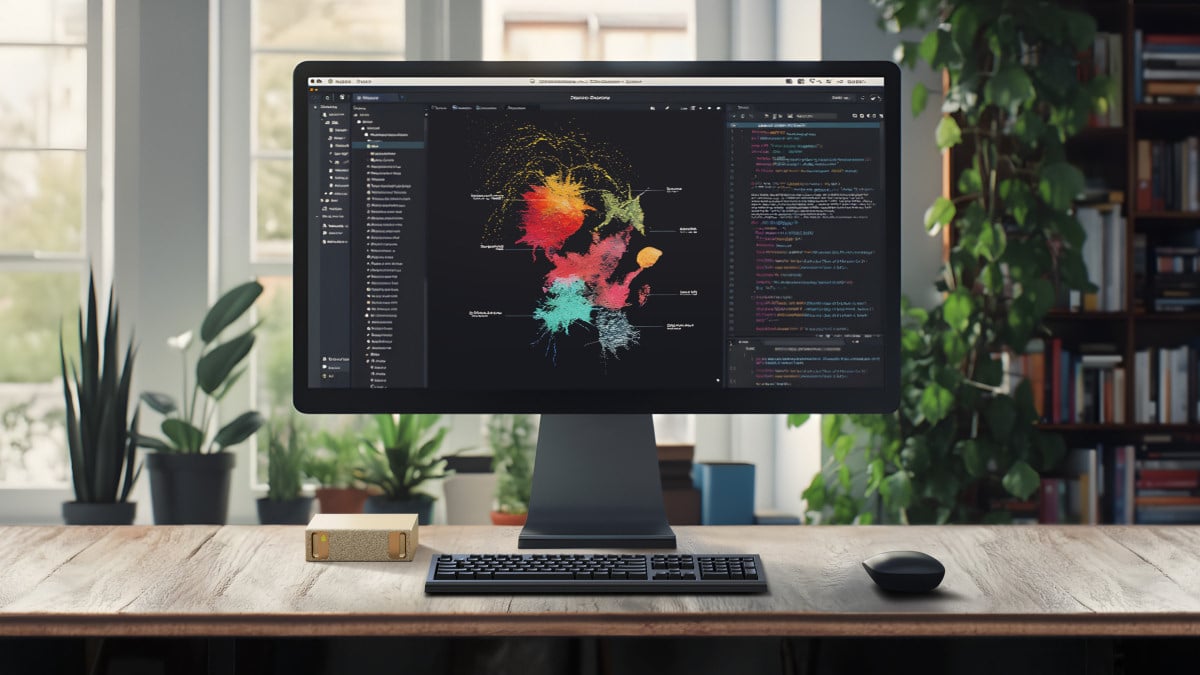
For years, the most ambitious AI development has been the exclusive domain of cloud giants and research labs. But Nvidia’s latest creation—the DGX Spark—signals a shift toward accessibility. Designed to fit neatly on a desktop yet deliver the computational punch of a supercomputer, the Spark is aimed squarely at developers, researchers, and creators who want to experiment with frontier-scale models from the comfort of their own workspace.
By blending remarkable processing power, integrated memory, and AI-optimized software, Nvidia is betting that the next wave of breakthroughs won’t come from server racks, but from individual innovators sitting behind their desks.
A Desktop-Sized Leap in AI Power
On Tuesday, Nvidia announced it would begin taking orders for the DGX Spark — a $4,000 desktop AI system delivering one petaflop of computing power and 128GB of unified memory, all within a device small enough to fit on a desk. Its standout feature is the high-capacity integrated memory, allowing users to run much larger AI models than typical consumer GPUs can handle.
Orders for the DGX Spark open Wednesday, October 15, via Nvidia’s website, with additional availability through manufacturing partners and select U.S. retailers.
Originally introduced as Project DIGITS in January and officially named in May, the DGX Spark is Nvidia’s latest effort to establish a new category of desktop workstation dedicated to AI development.
With this system, Nvidia aims to address a key issue for AI developers: many machine learning workloads exceed the limits of standard PCs and workstations, both in memory and software support. This often pushes developers toward cloud computing or data center infrastructure. However, it remains unclear how large the market is for a desktop AI workstation, especially given its upfront cost compared to the pay-as-you-go flexibility of cloud options.
The DGX Spark reportedly provides sufficient memory to handle unusually large local AI workloads — capable of running models with up to 200 billion parameters and fine-tuning those with up to 70 billion parameters without relying on external infrastructure. Possible applications include running large open-weight language models and media-generation systems such as AI image creators.
Nvidia says users can customize Black Forest Labs’ Flux.1 image-generation models, build vision-based search and summarization agents with its Cosmos Reason vision-language model, or develop chatbots powered by the Qwen3 model optimized for the DGX Spark.
Big Memory in a Small Package
Nvidia has packed an impressive amount of hardware into a 2.65-pound device measuring just 5.91 x 5.91 x 1.99 inches and consuming 240 watts of power. The system features Nvidia’s GB10 Grace Blackwell Superchip, ConnectX-7 200Gb/s networking, and NVLink-C2C technology offering five times the bandwidth of PCIe Gen 5. It also includes 128GB of unified memory shared between CPU and GPU processes.
The ARM-based DGX Spark runs Nvidia’s DGX OS — a custom Ubuntu Linux distribution designed for GPU workloads — and comes preloaded with the company’s AI software suite, including CUDA libraries and NIM microservices.
Starting at $3,999, the DGX Spark isn’t cheap, but compared to other hardware options, it could be a cost-effective alternative. For reference, high-end GPUs like the RTX Pro 6000 sell for around $9,000, while entry-level AI server GPUs such as the H100 start near $25,000. Though less powerful overall, the Spark’s unified memory makes it a more affordable choice for developers working locally.
According to The Register, the GB10 chip’s GPU performance is roughly equivalent to an RTX 5070. However, while the 5070 only offers 12GB of video RAM — limiting model size — the Spark’s 128GB of shared memory allows for much larger AI models, even if at slower speeds compared to GPUs like the RTX 5090 (which includes 24GB of RAM). For example, OpenAI’s 120-billion-parameter gpt-oss model requires about 80GB of memory to run — far beyond the capacity of standard consumer GPUs.
Why It Matters: Local AI Is the Next Frontier
The DGX Spark’s arrival taps into a growing movement in AI: bringing computation closer to the creator. While the cloud remains essential for large-scale training, developers increasingly want the ability to test, iterate, and fine-tune models locally — without latency, cost, or privacy barriers.
For smaller teams, researchers, and startups, local hardware also means freedom. They can train, tweak, and experiment with AI models without worrying about hourly cloud fees or data leaving their network. In a world where compute access has become the gatekeeper to innovation, a $4,000 desktop supercomputer feels almost revolutionary.
This isn’t just a product; it’s a statement about decentralization — a reminder that progress in AI doesn’t have to be confined to Silicon Valley’s data centers. It can happen anywhere, even in a home office.
A Nod to 2016
Nvidia founder and CEO Jensen Huang commemorated the DGX Spark’s debut by personally delivering one of the first units to Elon Musk at SpaceX’s Starbase facility in Texas — a symbolic repeat of a similar handoff Huang made to Musk at OpenAI in 2016.
“In 2016, we built DGX-1 to give AI researchers their own supercomputer. I hand-delivered the first system to Elon at a small startup called OpenAI, and from it came ChatGPT,” Huang said. “DGX-1 launched the era of AI supercomputers and unlocked the scaling laws that drive modern AI. With DGX Spark, we return to that mission.”
That callback carries emotional weight. The first DGX system helped seed the AI revolution that gave rise to ChatGPT, transforming how the world interacts with technology. Now, nearly a decade later, Nvidia’s new “Spark” seeks to reignite that same fire — only this time, the torch may be passed not to billion-dollar labs, but to individual innovators.
The Future of AI on the Desk
If the DGX Spark delivers on its promise, it could redefine how developers work with AI. For educators, it could become a classroom tool for hands-on learning. For startups, it might reduce their dependency on cloud infrastructure. And for creators, it represents something deeper — the empowerment to build, explore, and experiment without limits.
The desktop computer has always been a symbol of personal empowerment. The DGX Spark continues that legacy, giving the next generation of innovators the means to shape AI’s future from wherever they sit.