From scrappy startup to tech giant, Apple marks its 50th anniversary
Introduction: A Half-Century of Reinvention
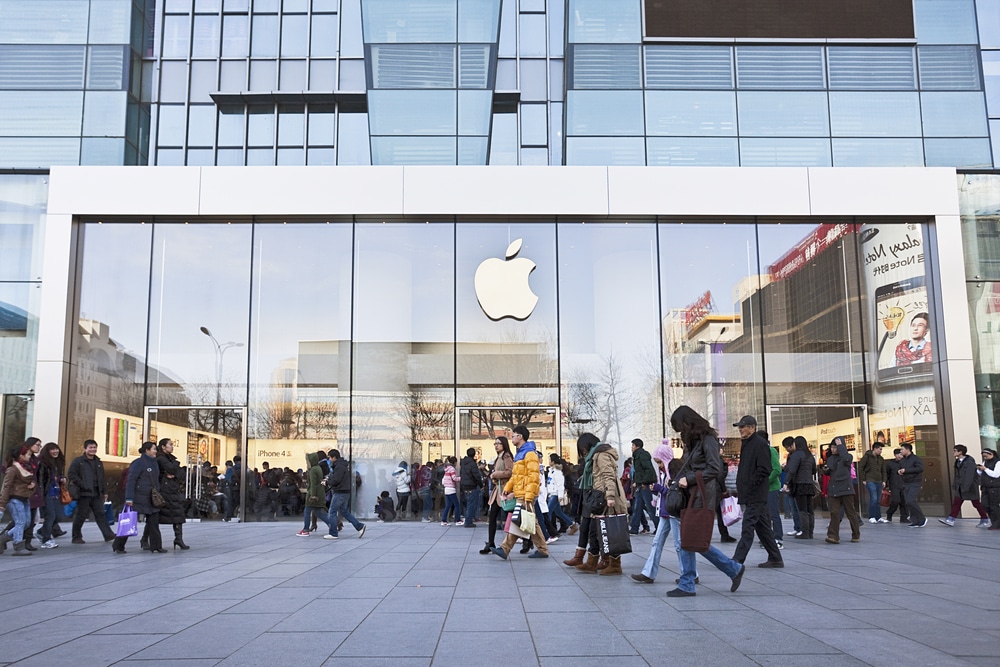
Fifty years after its founding in a California garage, Apple stands as one of the most influential companies in modern history. Its journey — part innovation, part mythology — reflects not just the evolution of technology, but the shaping of culture itself. As Apple celebrates its 50th anniversary, the stories, symbols and contradictions that define the company remain as compelling as ever.
In his new book, Apple: The First 50 Years, author David Pogue recounts a story about how the company’s late co-founder and CEO, Steve Jobs, pushed his team to refine the iPod.
“Apple’s then-CEO, Steve Jobs, introduces new colors for the iPod Nano during a product announcement in San Francisco in September 2008.”
In an interview with NPR, Pogue described the anecdote: “Steve Jobs wanted it to be as small as possible. So they brought him the prototype and then said, ‘This is it, Steve, as small as we can pack those components.'”
Released in 2001, the iPod helped propel Apple’s rise to cultural and corporate dominance in the 21st century.
According to the story, Jobs examined the device, then tossed it into a nearby fish tank in his office. As it sank, bubbles began to surface.
He reportedly responded: “If there’s air bubbles in there, there’s still room. Make it smaller!”
But Pogue notes a key caveat: the story never actually occurred. It’s simply another enduring Apple myth.
Of Pirates, Myths and Meaning
Few global companies have generated as much mythology as Apple Inc. (Apple is a financial supporter of NPR.)
Countless websites, books and films explore its history, from longtime fan blog Cult of Mac to the 1999 TV movie Pirates of Silicon Valley. There’s even a Grammy-winning opera — The (R)evolution of Steve Jobs — released in 2017.
Apple’s 1997 “Think Different” campaign played a major role in shaping its image as a driver of revolutionary change. CEO Tim Cook referenced the slogan again in a recent statement marking the company’s 50th anniversary.
Tech journalist and podcaster Jason Snell said it matters little whether the stories surrounding Apple are factual or not. Five decades after its founding on April 1, 1976, the company still holds a powerful place in the cultural imagination.
“Apple was always placing itself in that role of being countercultural, claiming that they want to make the world a better place,” Snell said.
The iconic campaign celebrating “the crazy ones, the misfits, the rebels” reflects this carefully cultivated identity — one that continues to resonate with audiences who see technology not just as utility, but as self-expression.
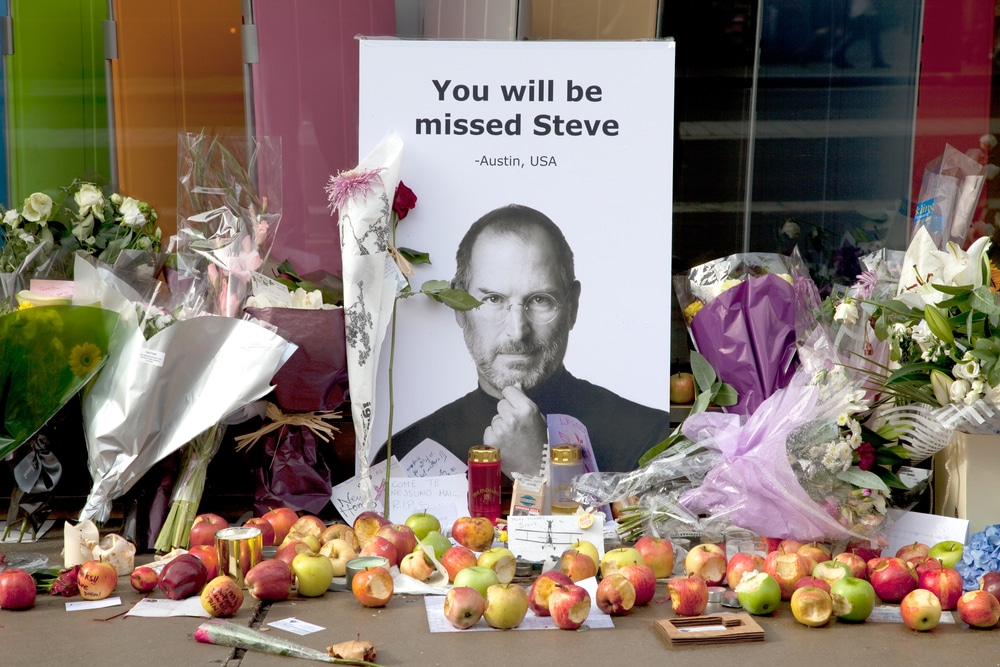
Not Just Marketing: A Culture of Creativity
That rebellious ethos, however, wasn’t purely branding.
Computer History Museum curator Hansen Hsu said it was embedded in Apple’s early products and internal culture. “They famously flew a pirate flag over their building,” Hsu said, referring to the company’s original Cupertino headquarters.
At a time when computers were largely confined to corporate offices, Apple’s early successes — including the 1984 Macintosh — helped broaden access to technology.
“That original Macintosh stood for creativity, individual expression, iconoclasm,” Hsu said.
This democratization of technology became one of Apple’s defining contributions. By making powerful tools accessible — and even aspirational — Apple reframed computing as something personal, emotional and creative.
Apple carried that identity forward into the 21st century with a series of transformative products, including the iPod, iPhone and App Store.
“The iPhone changed the communication, information and entertainment landscape.”
“That single gesture launched entire industries — Uber, DoorDash, Tinder, Airbnb,” Pogue said of the App Store, introduced in 2008.
These innovations didn’t just reshape markets — they redefined how people live, work and connect, embedding Apple deeply into the rhythms of everyday life.
Where “Think Different” Falls Short
Still, Pogue pointed out that this surge in connectivity and content has come with downsides, particularly as streaming took off around 2015. People suddenly carried a computer, camera and television with them at all times.
“The increase in screen time does seem to correlate with young people’s sense of isolation and depression,” he said.
Apple has acknowledged concerns about smartphone overuse. In a March interview with Good Morning America, Cook expressed his discomfort with excessive screen time.
“I don’t want people looking at the smartphone more than they’re looking in someone’s eyes,” he said.
The tension here is striking: the same devices that connect billions can also create distance. Apple, as both architect and participant in this digital ecosystem, finds itself navigating the consequences of its own success.
The company continues to present itself as a force for change, even reviving the “think different” slogan in its 50th anniversary messaging. But Apple today is far removed from its origins. It is now one of the most profitable corporations in the world — and doesn’t always embody its countercultural image.
The company has drawn criticism for Cook’s relationship with the Trump administration, including his $1 million personal donation to the president’s second inauguration.
When asked about this and other issues, Cook maintained that his focus is not political.
“I focus on policy,” Cook said. “And so I’m very pleased that the president and the administration is accessible to talk about policy.”
The “Teflon” Effect: Why Apple Endures
Even so, Apple often avoids the level of backlash faced by its competitors.
“I personally have not seen any ‘I’m canceling Apple TV’ principled stand in the same way that people canceled Disney+ and Hulu for Jimmy Kimmel being sidelined,” said Vulture TV critic Roxana Hadadi. “There’s something about Apple that I think keeps it ‘Teflon’ from these types of critiques.”
Part of this resilience lies in the emotional connection Apple has cultivated with its users. For many, Apple is not just a company — it is an identity, a creative partner, even a philosophy.
Digital artist Kyt Janae, whose San Francisco studio is filled with Apple devices, says she relies on them for all her creative work.
“I don’t see Apple as a brand the same way that I would look at any other tech company or clothing brand or anything else,” she said.
Janae acknowledges Apple’s status as a massive corporation driven by shareholder interests. Yet the creativity and boldness she associates with the brand — much like its early reputation — continue to resonate.
“I’m, like, locked in lifelong, no matter what happens,” Janae said.
Conclusion: Between Myth and Reality
At 50, Apple exists in a space few companies ever reach — somewhere between myth and institution. Its legacy is built as much on storytelling as it is on silicon and software.
The myths may not always be true, but they reveal something deeper: a company that has consistently positioned itself at the intersection of technology and human aspiration.
Whether Apple can continue to “think different” in the decades ahead remains an open question. But if its first half-century is any indication, the story — real or imagined — is far from over.