Lord John Nash: The Social Media Crisis
Lord John Nash serves as chair of both Future and Future Academies, charities dedicated to supporting young people and children. This article will look at social media, assessing its ever-increasing impact on young people’s daily lives, and calls for curbs to be put in place to restrict access for children.
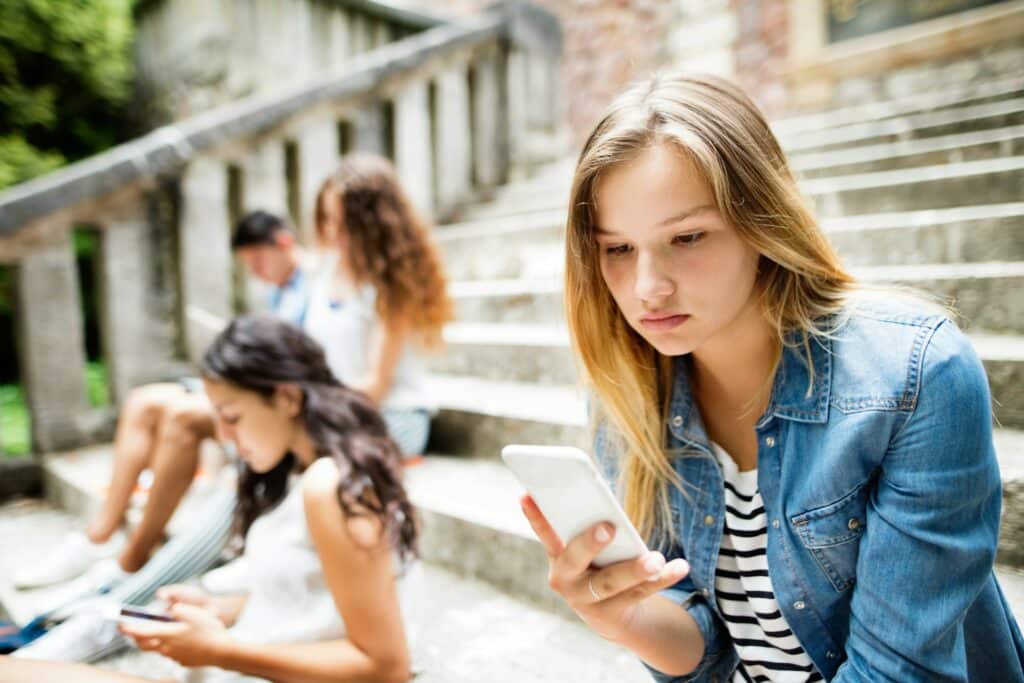
Evidence shows that, for young people in particular, digital media can be incredibly harmful. In an article for the Telegraph newspaper, former UK Education Minister Lord Nash called upon the UK Government to put in place legislation restricting access to social media for under-16-year-olds.
In March 2026, the Government announced that hundreds of teenagers across the UK would be enlisted in trial social media bans over the coming months, establishing daily screen time limits and digital curfews as part of the Government’s mission to crack down on the negative impacts of smartphone use on children. The trials are being undertaken as part of a three-month consultation that could lead to an outright ban on social media for under-16-year-olds.
With growing agreement that more needs to be done, the Government issued a statement announcing what it touts as ‘the world’s most ambitious consultation on social media’. In addition to considering whether a minimum age should be established for users accessing social media, the consultation will also consider whether social media platforms should be required to switch off addictive features such as autoplay and infinite scrolling that keep children on their screens late into the night. The consultation will also consider whether children should be able to interact with AI chatbots without restriction, as well as assessing the effects of gaming platforms such as Roblox.
The first trial will involve circa 150 children aged between 13 and 15, testing their responses to overnight screen curfews, being limited to one hour’s social media use daily and being denied access altogether. In addition to sleep, the trial will also assess the children’s mood and physical activity levels.
Smartphone Free Childhood recently rallied 250,000 supporters, persuading them to write to their local MP demanding a social media ban for under-16-year-olds, support for such moves is clear, with ordinary parents across the country struggling to out-parent algorithms developed by trillion-dollar tech giants.
The measures form part of wider government objectives to prevent children and young people ‘doomscrolling’ by restricting their use of social media. The prime minister gave his strongest signal that he intended to crack down on some of social media’s more addictive features early in 2026 to prevent obsessive behaviour among children. Doomscrolling is a term used to describe spending excessive amounts of time online reading predominantly negative news published on social media platforms.
As the prime minister pointed out, screen addiction has been shown to damage children’s concentration as well as affecting their socialisation, drawing them away from spending time outdoors, playing with their peers and other activities associated with a happy, healthy childhood. The UK Government has pledged to act in ‘months, not years’ to protect children and young people online. To this end, they are proposing to enact new legislation banning the use of social media by under-16-year-olds as early as this year, provided the public consultation favours it.
Young people can be exposed to many types of harmful content online, particularly through social media. Some of that content is illegal. Other material may be legal but still be damaging for young viewers, for example, the promotion of self-harm, eating disorders and unhealthy body images. It may not be age-appropriate, containing violence or nudity. There are also risks from activities such as harassment and cyberbullying. Those who support a ban contend that it would go a long way towards limiting children’s exposure to online harms. In Australia, for example, the Australian Government has banned social media for under-16s to protect children from the risks associated with design features encouraging them to spend more time on their screens, while also serving up content that can be harmful to young people’s health and well-being.
Andy Burrows serves as chief executive of the Molly Rose Foundation, a non-profit established in response to a 14-year-old girl taking her own life after exposure to harmful Instagram posts. As he pointed out in an interview with The Guardian, parents are demanding action and need the Prime Minister to get this right. Andy Burrows underscored the need for evidence-based rather than simplistic solutions that would create a false sense of safety and quickly unravel.