NVIDIA DLSS 5 Marks AI-Driven Leap Forward in Game Visual Fidelity
In the relentless pursuit of realism, the gaming industry has long chased a moving target: visuals that are indistinguishable from reality, yet rendered instantly. With the unveiling of DLSS 5, NVIDIA is positioning itself at the center of that evolution—promising not just incremental gains, but a fundamental shift in how game graphics are created and experienced.
NVIDIA today introduced DLSS 5, describing it as its most significant advancement in computer graphics since real-time ray tracing debuted in 2018.
DLSS 5 brings a real-time neural rendering model that enhances pixels with photorealistic lighting and materials. By narrowing the gap between rendered visuals and reality, the technology enables developers to achieve a new tier of realism in games—previously only possible in Hollywood visual effects.
“Twenty-five years after NVIDIA invented the programmable shader, we are reinventing computer graphics once again,” said Jensen Huang, founder and CEO of NVIDIA. “DLSS 5 is the GPT moment for graphics — blending hand-crafted rendering with generative AI to deliver a dramatic leap in visual realism while preserving the control artists need for creative expression.”
Closing the Cinematic Divide
Since the early days of GeForce, NVIDIA has focused on providing the graphical power needed for developers to build immersive, lifelike worlds—where lighting, reflections, and shadows behave according to physical laws. That ambition has steadily reshaped the industry, pushing both hardware and software to new limits.
From the introduction of programmable shaders with GeForce 3 in 2001, to CUDA with the GeForce 8800 GTX in 2006, to real-time ray tracing with the GeForce RTX 2080 Ti in 2018, and most recently path tracing and neural shaders with the GeForce RTX 5090 in 2025, NVIDIA has driven major architectural innovations—delivering a 375,000x increase in compute performance.
Yet despite these leaps, a stubborn limitation remains. The rendering capability available within a 16-millisecond game frame is still only a fraction of what’s required for a photorealistic Hollywood VFX frame, which can take minutes or even hours to produce. In other words, brute-force computing alone cannot close the gap between real-time graphics and cinematic realism.
DLSS 5 is NVIDIA’s answer to that constraint—not by rendering more, but by rendering smarter.
From Performance Tool to Visual Engine
Originally launched in 2018, NVIDIA DLSS began as an AI-based performance solution, first through resolution upscaling and later by generating entirely new frames. It has since been adopted in more than 750 games, becoming an industry benchmark and a near-default feature in modern PC titles.
Earlier this year at CES, DLSS 4.5 pushed that concept further, using AI to generate 23 of every 24 pixels displayed on screen. That milestone hinted at a future where AI does the majority of the visual heavy lifting.
Now, with DLSS 5, NVIDIA is shifting the role of AI from performance enhancement to visual authorship.
While video AI models have rapidly improved in generating photorealistic imagery, they typically operate offline, lack precise control, and often produce unpredictable outputs. In gaming, that unpredictability is unacceptable. Every frame must be consistent, deterministic, and tightly aligned with a developer’s intent.
DLSS 5 bridges that gap.
How DLSS 5 Works in Real Time
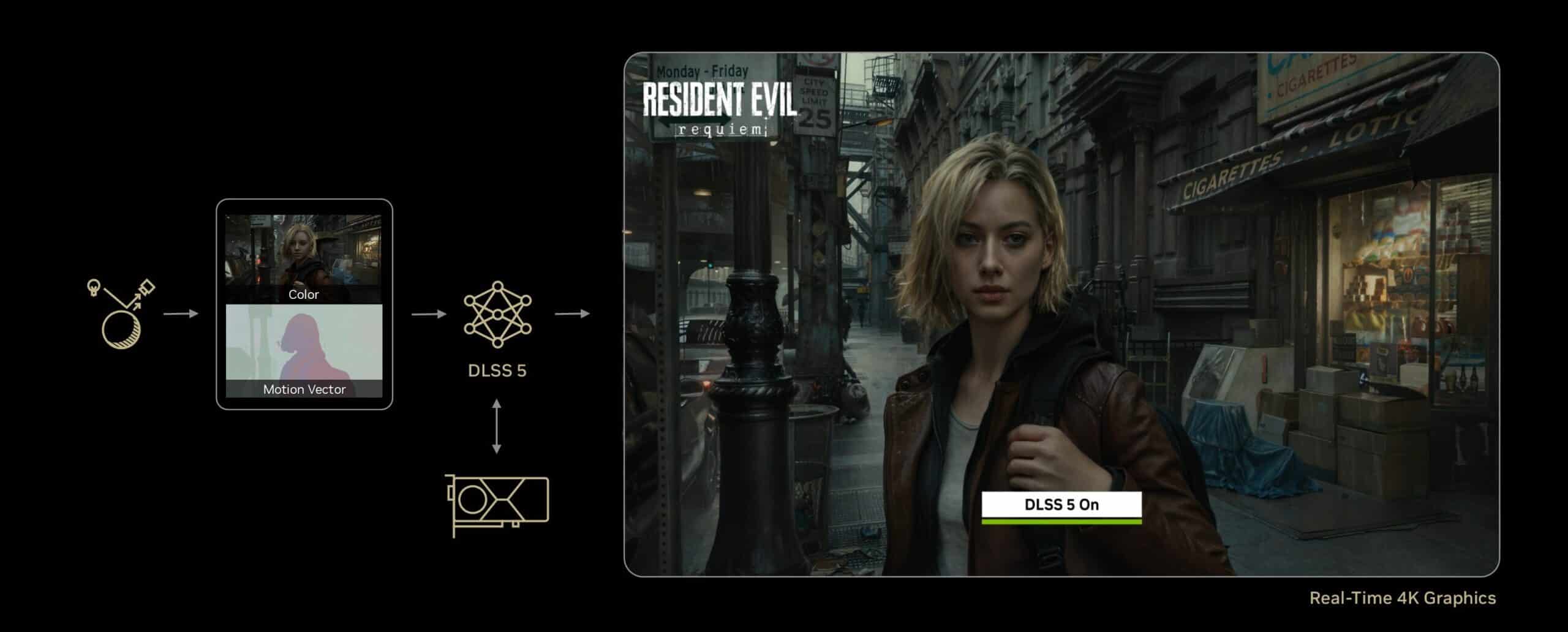
At its core, DLSS 5 takes a game’s color and motion vectors for each frame as input, then applies an advanced AI model to enrich the scene with photorealistic lighting and materials. Crucially, these enhancements remain anchored to the original 3D data—ensuring consistency from frame to frame.
The system operates in real time at up to 4K resolution, maintaining the responsiveness players expect while dramatically elevating visual quality.
What sets DLSS 5 apart is its contextual understanding. The model is trained end-to-end to interpret complex scene elements—including characters, hair, fabric, and translucent skin—as well as environmental lighting conditions such as front-lit, back-lit, or overcast scenarios—all from a single frame.
Using this deep semantic awareness, DLSS 5 produces highly accurate visuals, capturing subtle effects like subsurface scattering in skin, the delicate sheen of fabrics, and nuanced light interactions with hair. These are the kinds of details that traditionally required offline rendering pipelines.
Importantly, this is not a black box. Developers retain creative control.
DLSS 5 provides granular tools for adjusting intensity, color grading, and masking, allowing artists to determine exactly where and how enhancements are applied. This ensures that each game’s unique visual identity is preserved rather than overwritten by AI.
Integration is also designed to be frictionless, using NVIDIA’s existing Streamline framework—the same system already powering DLSS and NVIDIA Reflex—making adoption faster for studios already in the ecosystem.
What This Means for Developers—and Players
For developers, DLSS 5 represents more than a technical upgrade; it expands what is creatively possible within real-time constraints. Worlds can be richer, characters more lifelike, and lighting more physically accurate—without the traditional performance penalties.
For players, the impact is more immediate: deeper immersion.
The difference is not just sharper textures or higher resolutions, but a more convincing world—where materials behave realistically, light interacts naturally, and subtle details enhance emotional engagement.
Availability and Developer Adoption
DLSS 5 will be supported by major publishers and developers across the industry, including Bethesda, CAPCOM, Hotta Studio, NetEase, NCSOFT, S-GAME, Tencent, Ubisoft, and Warner Bros. Games—an early signal of broad adoption.
“NVIDIA and Bethesda have a long history of pushing gaming graphics and innovation forward, and DLSS 5 represents the next major step in that journey,”said Todd Howard, studio head and executive producer at Bethesda Game Studios. “With DLSS 5 the artistic style and detail shine through without being held back by the traditional limits of real-time rendering. We’re excited to work with this new technology and look to bring DLSS 5 to Starfield and future Bethesda titles.”
“DLSS 5 represents another important step in pushing visual fidelity forward, helping players become even more immersed in the world of Resident Evil.”
“At CAPCOM, we strive to create experiences that feel cinematic, compelling and deeply believable — where every shadow, texture and ray of light is crafted with intention to enhance atmosphere and emotional impact,”
“The way it renders lighting, materials and characters changes what we can promise to players. On Assassin’s Creed Shadows, it’s letting us build the kind of worlds we’ve always wanted to.”
“Immersion is about making the world feel real. DLSS 5 is a real step towards that goal,” said Charlie Guillemot, co-CEO of Vantage Studios. “The way it renders lighting, materials and characters changes what we can promise to players. On Assassin’s Creed Shadows, it’s letting us build the kind of worlds we’ve always wanted to.”
The technology will be featured in upcoming titles such as AION 2, Assassin’s Creed Shadows, Black State, CINDER CITY, Delta Force, Hogwarts Legacy, Justice, NARAKA: BLADEPOINT, NTE: Neverness to Everness, Phantom Blade Zero, Resident Evil™ Requiem, Sea of Remnants, Starfield, The Elder Scrolls IV: Oblivion Remastered, Where Winds Meet, and others.
Looking Ahead
DLSS 5 is set to launch this fall, with an early preview debuting this week at GTC. Demonstrations will showcase its capabilities in titles like Resident Evil™ Requiem, EA SPORTS FC™, Starfield, Hogwarts Legacy, alongside the NVIDIA Zorah tech demo.
If earlier DLSS iterations were about making games run better, DLSS 5 is about making them look—and feel—real.
And for an industry built on immersion, that shift could redefine expectations for years to come.
Resident Evil™ Requiem


Click here to load a fullscreen 4K comparison


Click here to load a fullscreen 4K comparison


Click here to load a fullscreen 4K comparison
EA SPORTS FC™


Click here to load a fullscreen 4K comparison


Click here to load a fullscreen 4K comparison
Starfield


Click here to load a fullscreen 4K comparison

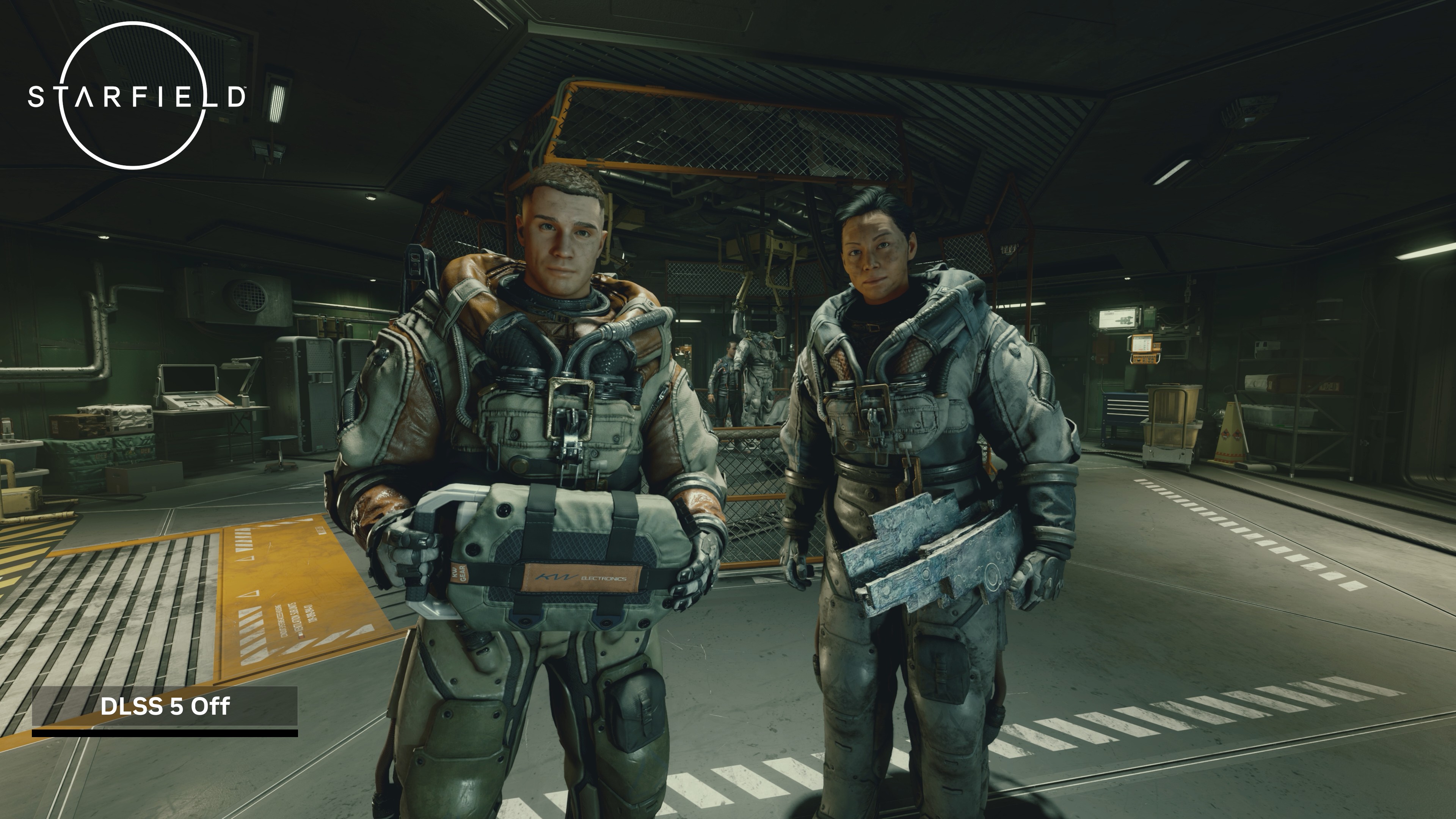
Click here to load a fullscreen 4K comparison


Click here to load a fullscreen 4K comparison
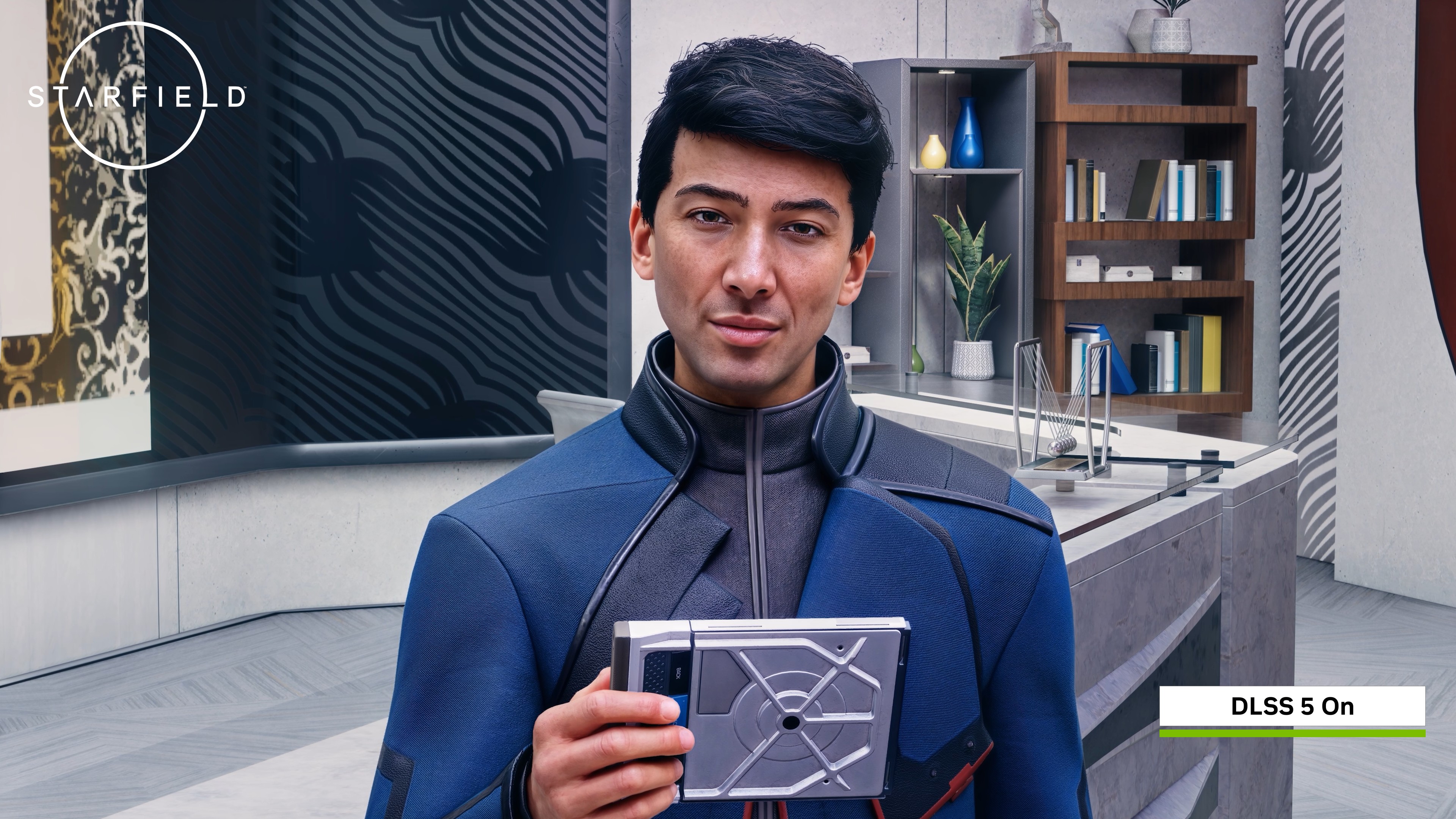
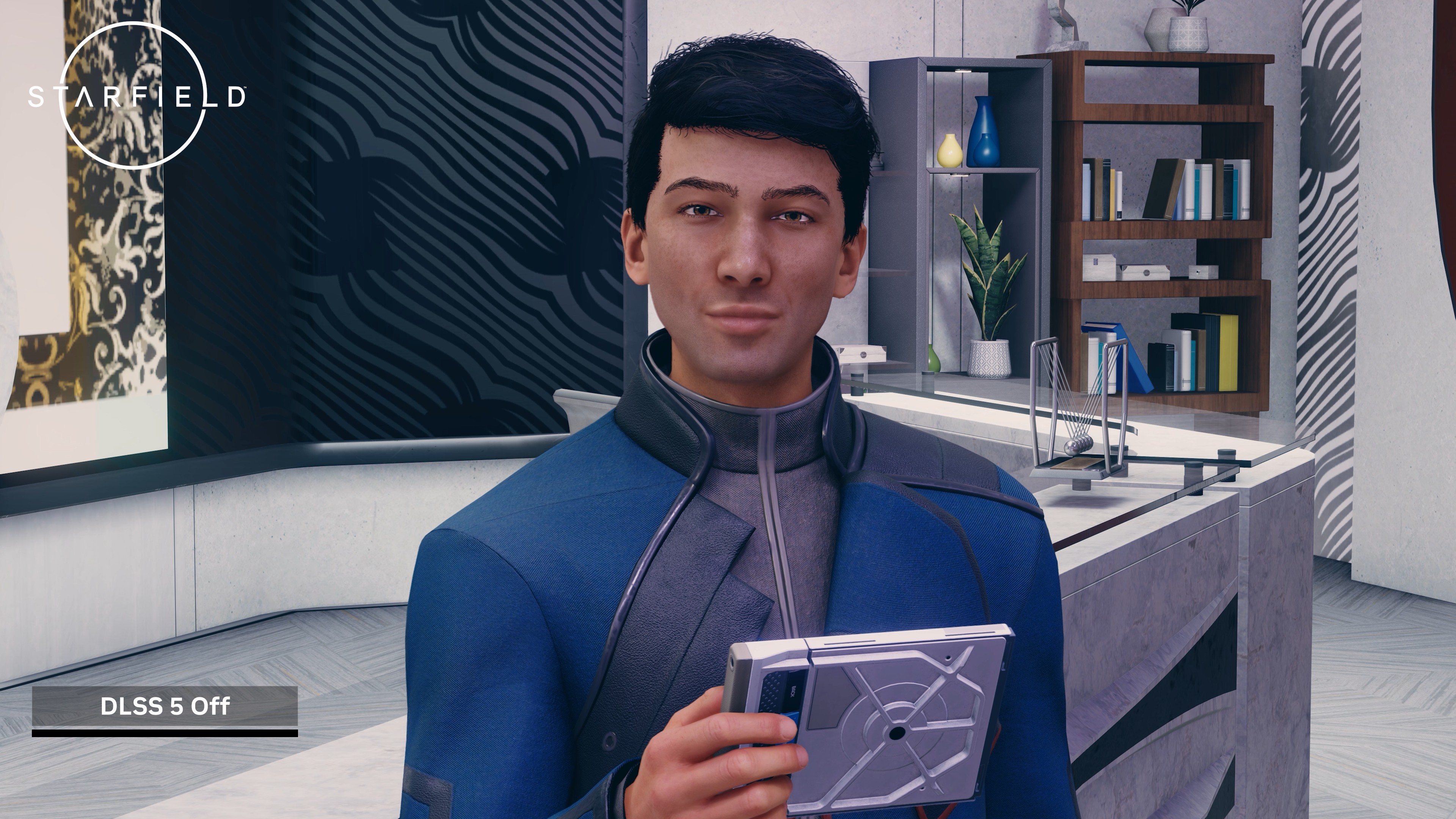
Click here to load a fullscreen 4K comparison
Hogwarts Legacy


Click here to load a fullscreen 4K comparison
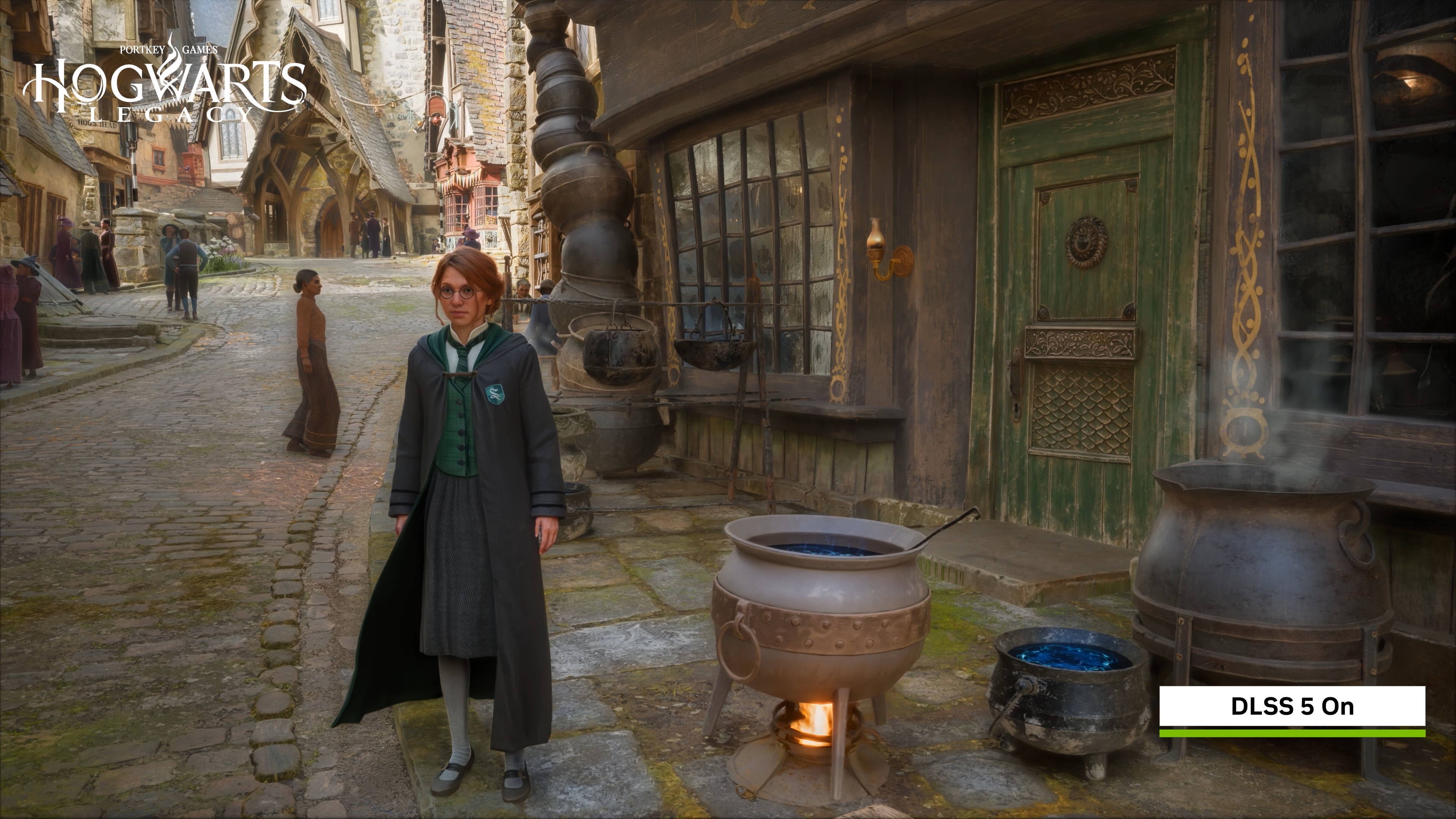
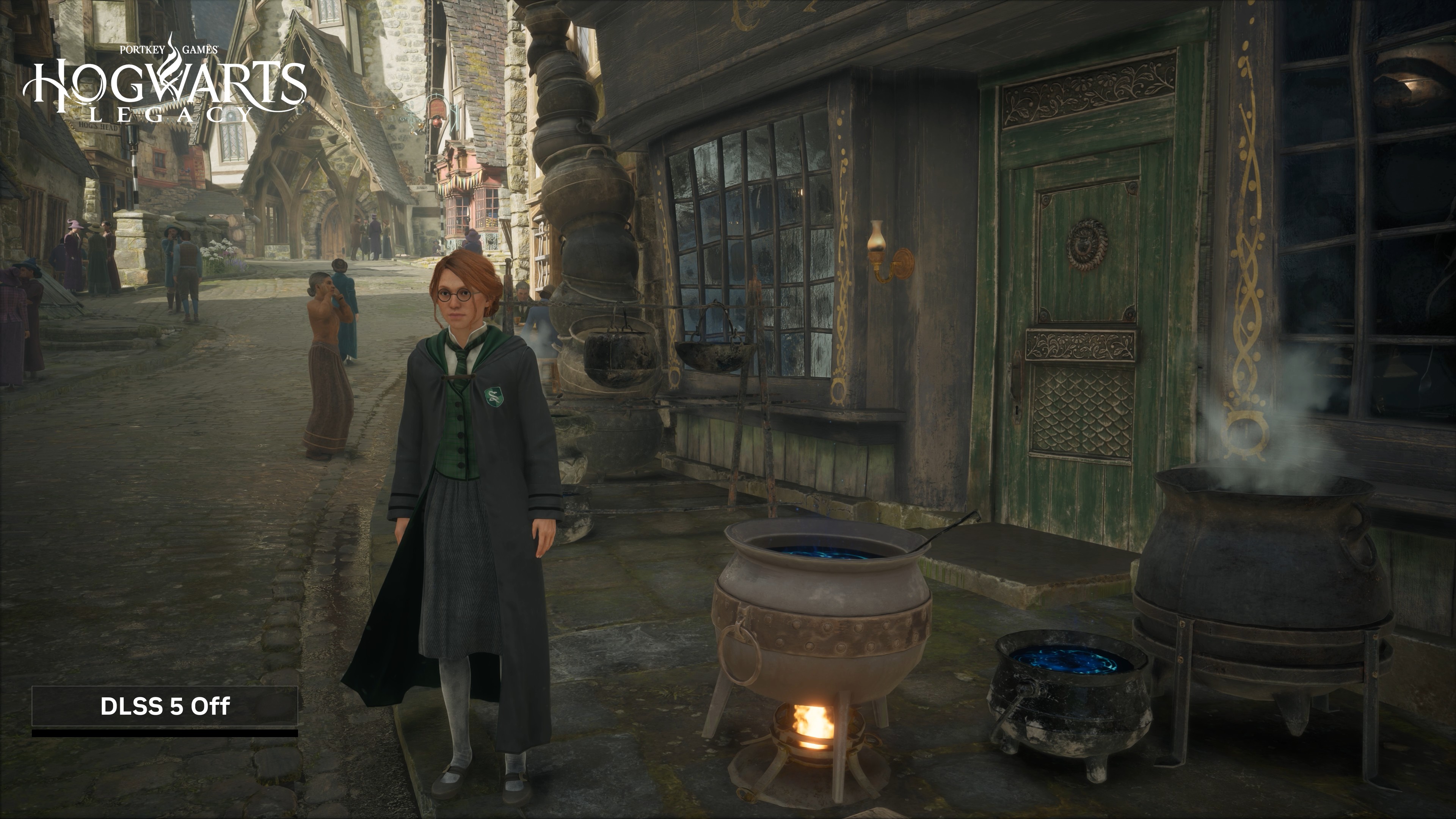
Click here to load a fullscreen 4K comparison
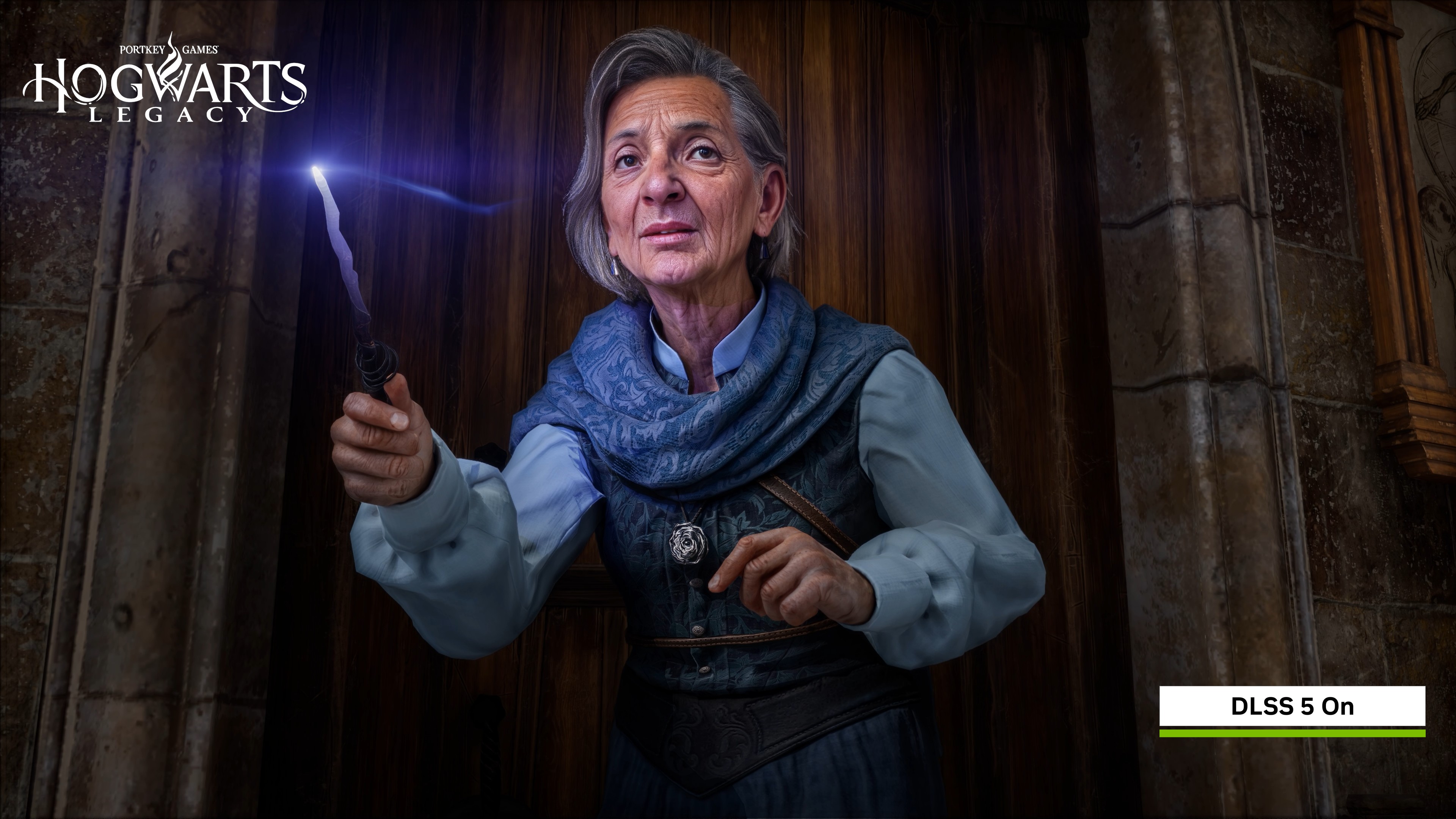
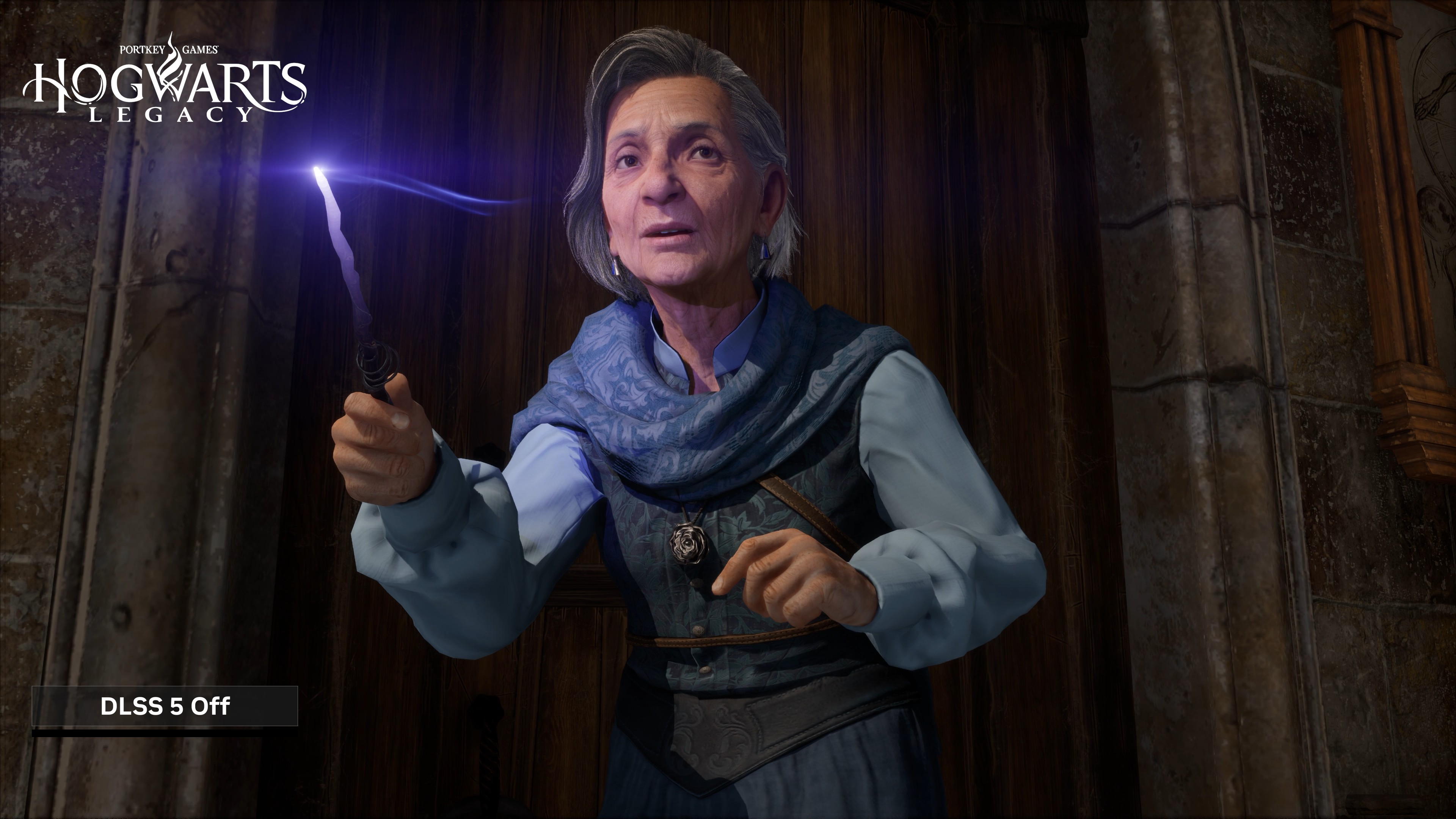
Click here to load a fullscreen 4K comparison
NVIDIA Zorah Tech Demo


Click here to load a fullscreen 4K comparison


Click here to load a fullscreen 4K comparison


Click here to load a fullscreen 4K comparison


Click here to load a fullscreen 4K comparison