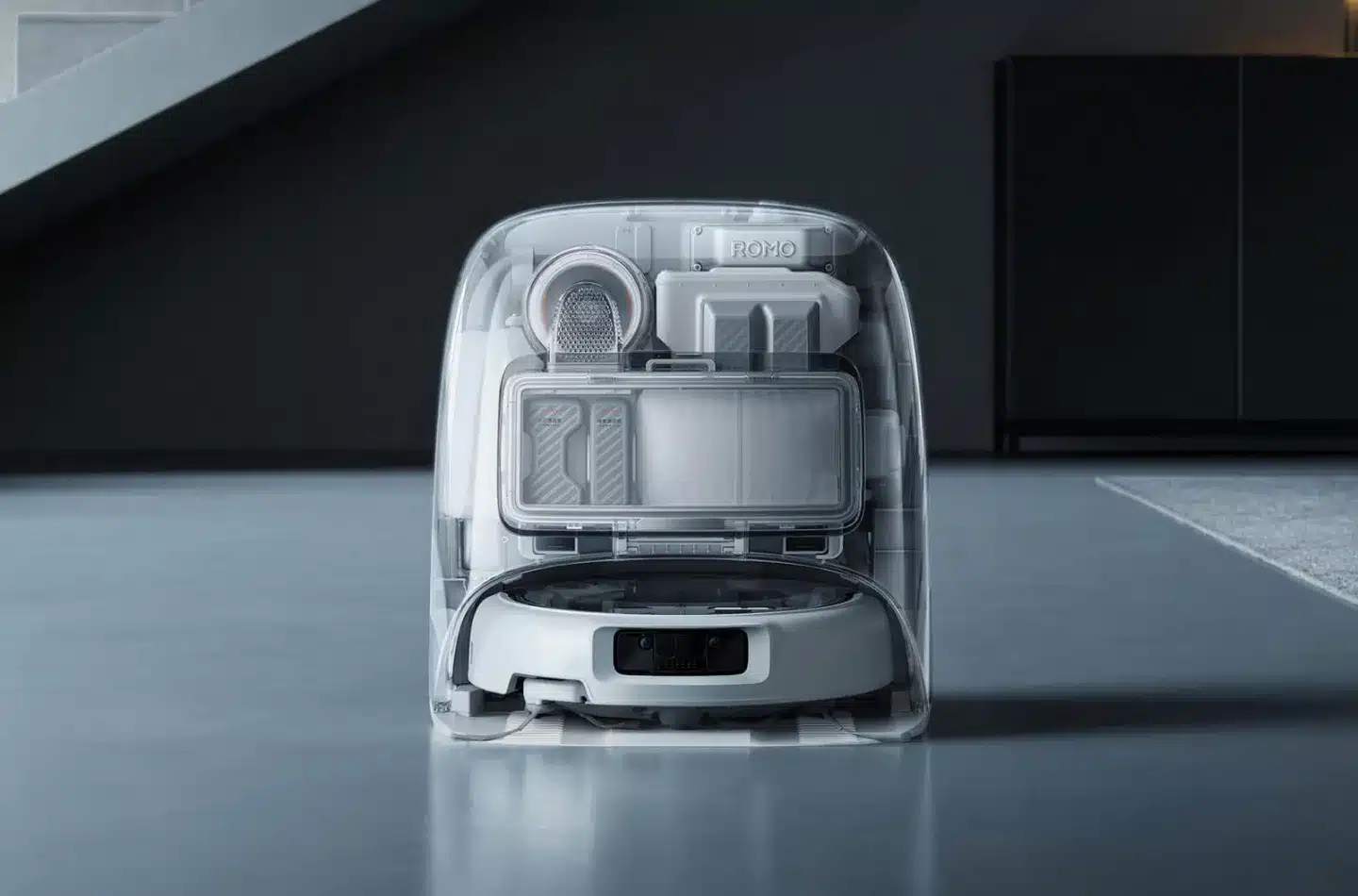
DJI Enters the Smart Home Arena with Its First Robot Vacuum — the Transparent, Tech-Packed Romo
After years of pushing the boundaries in aerial photography and cinematic drones, DJI is venturing indoors. The company best known for revolutionizing consumer drones is now bringing its cutting-edge vision and AI technologies to the world of smart home cleaning. Its latest product line, the DJI Romo, marks the brand’s debut into the robot vacuum space — and it’s anything but ordinary.
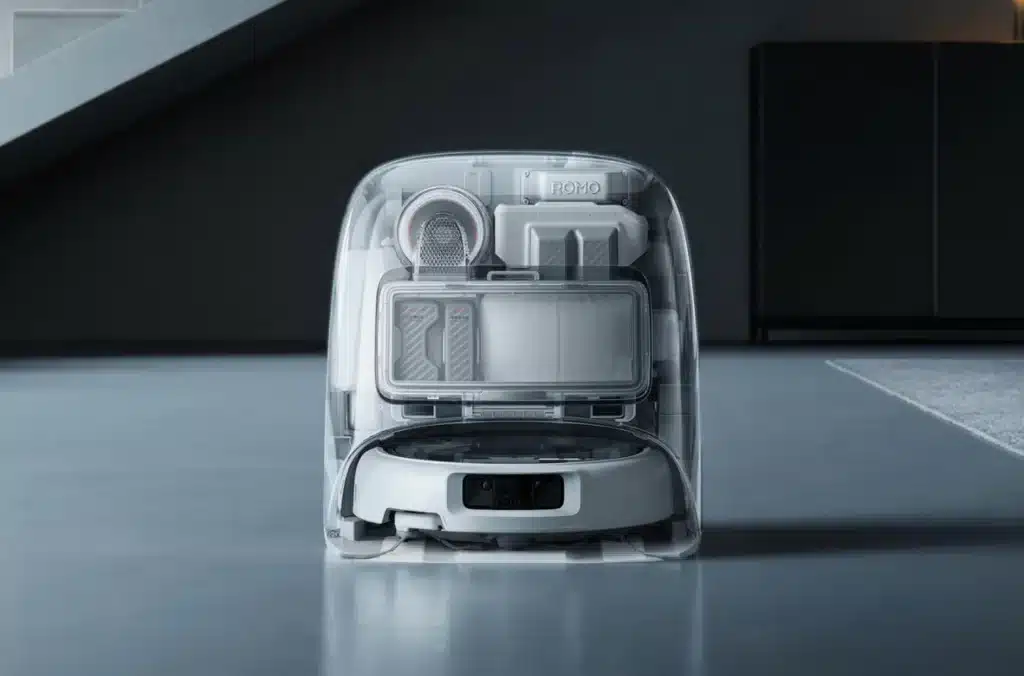
With futuristic design choices (including fully transparent shells) and advanced navigation powered by drone tech, the Romo lineup looks to redefine what consumers can expect from a robotic vacuum. But beyond the eye-catching design lies a deep integration of DJI’s signature innovation ethos.
A Vacuum with the Brain of a Drone
At first glance, the Romo models might resemble your typical robovac. But under the hood — or rather, under the clear polycarbonate shell in some models — the influence of DJI’s drone expertise is unmistakable. Each Romo is equipped with a binocular fisheye vision sensor and three wide-angle laser sensors, working in tandem with a machine learning perception algorithm to understand and adapt to its surroundings.
This multi-sensor approach enables the Romo to see and interpret obstacles with striking accuracy. It can detect items as small and subtle as 2mm-wide charging cables or thin cards, automatically adjusting its behavior to avoid tangling, bumping, or creating additional messes. Unlike many vacuums that simply “bump and go,” Romo calculates a context-aware strategy for each object it encounters — brushing close to furniture legs, for instance, but veering wide around pet accidents or dropped socks.
Power Meets Precision
The Romo is more than just smart — it’s strong. With up to 25,000Pa of suction, it nearly doubles the power of flagship competitors like the newly released Roomba Max 705. This powerhouse is complemented by a robust cleaning mechanism: a double roller brush with anti-tangle design, dual sweeping arms that extend for edge-to-edge coverage, and twin spinning mop pads that raise themselves when transitioning onto carpet.
Even more impressive is Romo’s responsive behavior to different messes. Spot a pile of kibble on the floor? The vacuum slows its movement and reduces brush agitation to prevent scattering, while simultaneously increasing suction to ensure nothing’s left behind. It’s small touches like this that hint at a deeper level of engineering thought — one that prioritizes real-world usability, not just specs.
Transparent Tech: A Design That Dares to Show Off
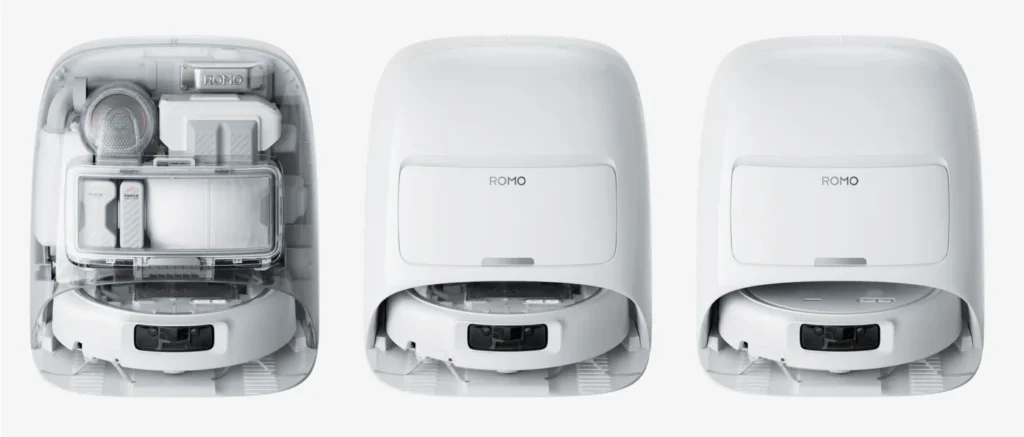
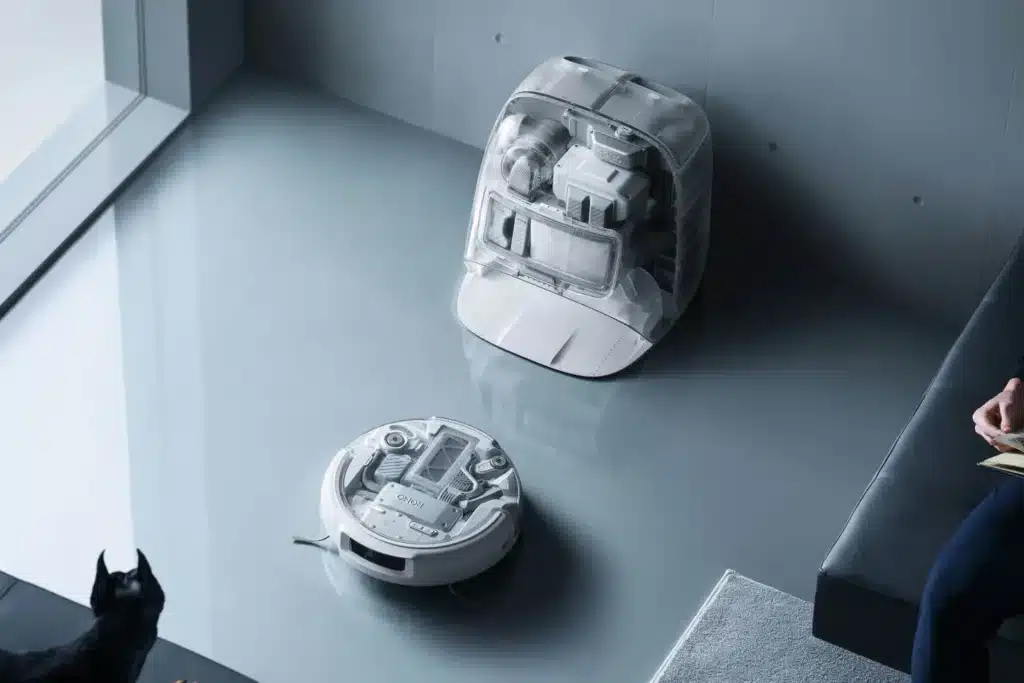
Where Romo truly turns heads is in its industrial-meets-sci-fi aesthetic. While the entry-level Romo S features an opaque casing, the Romo A introduces a transparent top panel that offers a glimpse into the bot’s internal components. The top-tier Romo P, however, goes all in — with a fully transparent housing and a see-through version of the docking station.
It’s a bold design decision that leans into the growing trend of transparency in consumer electronics (à la Nothing Phone), and it gives gadget lovers the opportunity to admire the machine’s intricate internal choreography. That said, whether this glass-house approach holds up after months of real-world use — and visible dust — remains to be seen.
Smarter Cleaning with Specialized Features
In addition to aesthetics, the Romo P boasts a unique dual-tank system that supports alternative mopping solutions. For example, users can load an antibacterial cleaner specifically for bathroom floors or a degreaser tailored for kitchens. Cleaning plans can be customized accordingly, letting Romo target areas of your home with different chemical solutions — a level of smart precision typically reserved for industrial-grade machines.
Navigation, too, is where DJI’s drone heritage shines. The Romo leverages autonomous route-planning algorithms originally built for drones, dynamically creating the most efficient cleaning paths and storing them locally to preserve privacy. Every model supports voice commands and functions as a remote-controlled security rover — complete with real-time video streaming and two-way audio for checking in on pets, children, or deliveries.
Pricing, Availability, and the Wait for the West
As with many DJI products, global fans may have to wait a bit. The Romo series is initially launching in China, with the Romo S and A priced at CNY 4,699 (~$654), and the Romo P coming in at CNY 6,799 (~$947). According to reports from DroneDJ, an international release is planned for later this year, but details regarding U.S. availability or overseas pricing remain unconfirmed.
A Promising Step Toward the Smart Home of the Future
DJI’s move into the home robotics space may seem like a pivot, but in many ways, it’s a natural progression. The Romo combines the company’s strengths in machine vision, AI navigation, and hardware engineering, wrapped in a design that’s as eye-catching as it is functional.
If the real-world performance lives up to the promise — and if the transparent components can stay as clean on the inside as they do in the marketing renders — DJI’s Romo could shake up a robovac market that’s been due for disruption.
Until then, early adopters and gadget enthusiasts alike will be watching closely — and perhaps preparing to make some room on the charging dock.
About The Author

Related Posts

Apple’s HomeView Smart Home Hub Reportedly Arrives in November—Here’s What to Expect

Meta VR Glasses vs URXR One: $1,299 Standalone vs $999 Modular