Amazon to Withdraw Support for Older Kindles, Sparking Backlash From Users
For many readers, the Kindle has long been a quiet, dependable companion — a device built for simplicity, longevity, and immersion. That is precisely why Amazon’s latest announcement has struck a nerve. The company’s decision to phase out support for some of its oldest e-readers is not just a technical update, but, for some, the end of an era.
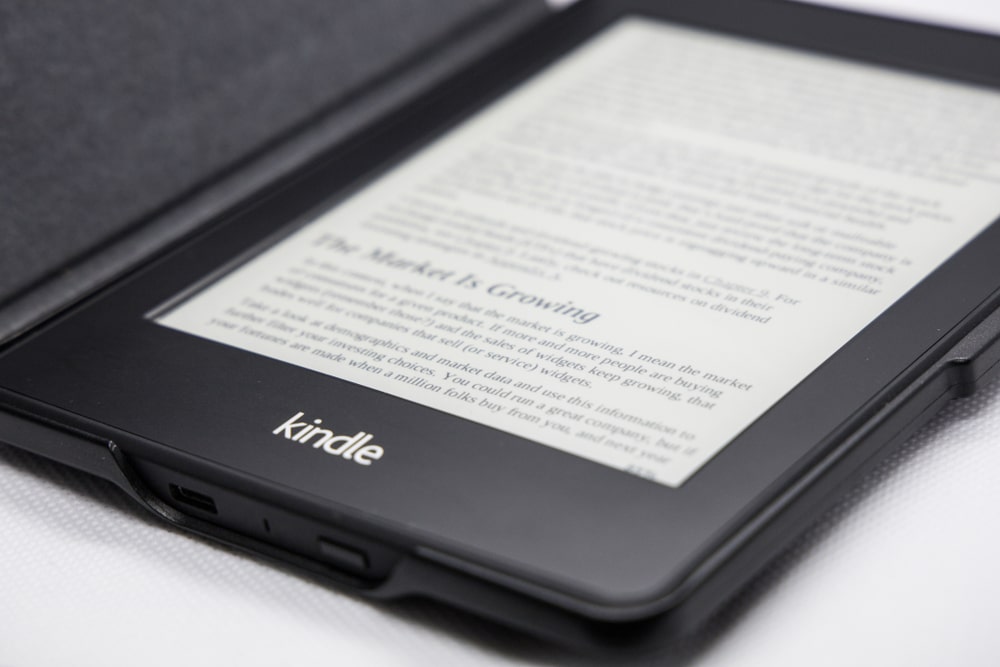
Amazon has announced it will soon end support for a range of older Kindle devices — a decision that has drawn criticism from some users.
In emails sent by the company, customers were thanked for being a “longtime Kindle customer” but informed that devices released in or before 2012 will stop receiving updates from 20 May. As a result, these older models will no longer be able to download new e-books.
The change affects some of the earliest Kindles, including the Kindle Touch and certain Kindle Fire tablets. While Amazon noted it has supported these devices for many years and is offering discounts to help users “transition to newer devices”, critics argue the move could render as many as two million devices effectively obsolete.
“I have a Kindle Touch that I’ve had since 2013, it works great, I bought a book on it a few months ago, and suddenly it’s obsolete,” one user wrote on X, tagging Amazon.
Another user described the Kindle as “probably one of the most low-tech devices ever made” and questioned the need to discontinue support. “A Kindle is a text device! There is no need for updates,” they added.
Devices affected
In a statement, an Amazon spokesperson said: “Starting May 20, 2026, customers using Kindle and Kindle Fire devices released in 2012 and earlier will no longer be able to purchase, borrow, or download new content via the Kindle Store.
“These models have been supported for at least 14 years—some as long as 18 years—but technology has come a long way in that time, and these devices will no longer be supported moving forward.”
Affected devices include:
Kindle e-readers
Kindle 1st Generation (2007), Kindle DX and DX Graphite (2009 and 2010), Kindle Keyboard (2010), Kindle 4 (2011), Kindle Touch (2011), Kindle 5 (2012), and Kindle Paperwhite 1st Generation (2012)
Kindle Fire tablets
Kindle Fire 1st Gen (2011), Kindle Fire 2nd Gen (2012), Kindle Fire HD 7 (2012), Kindle Fire HD 8.9 (2012)
Users will still be able to access previously downloaded books, and their Kindle libraries will remain available via Amazon’s mobile and desktop apps. However, Amazon warned that performing a factory reset on affected devices could render them unusable.
More than a gadget: why users are reacting strongly
For many, the frustration goes beyond the loss of a feature. E-readers like the Kindle were marketed — and widely understood — as durable, long-term devices. Unlike smartphones or laptops, they were never meant to be replaced every few years.
Kay Aaronricks, 46, told the BBC she was taken aback by the announcement — and by how attached she felt to her 14-year-old device.
“It does show how much of a part that Kindle plays in my life,” she said, noting it had allowed her to “take all of my books with me” while working and travelling.
“I love paper books like anyone does, but the Kindle is more practical,” she added.
That practicality — a distraction-free, purpose-built reading experience — is exactly what some users fear losing if they are pushed toward newer models.
Aaronricks also raised concerns about advertisements on some newer discounted models and how these might affect the reading experience.
“It’s about taking yourself away from reality and disconnecting from advertising, marketing, social media, all those other things that we’re surrounded with in life,” she said.
A clash between longevity and progress
At the heart of the issue is a familiar tension in the tech industry: the balance between supporting older hardware and advancing new capabilities.
Industry analyst Paolo Pescatore said the decision may frustrate users whose devices still function well, but described it as “understandable from a security and support perspective”.
“The challenge is that these devices were built for a different era and are not equipped to run newer, more data-hungry services and features,” he said, adding that ageing hardware can present ongoing challenges.
As digital ecosystems evolve — with enhanced storefronts, richer content, and tighter security requirements — maintaining compatibility with decade-old hardware becomes increasingly complex and costly.
However, for users, the distinction between “unsupported” and “unusable” can feel blurred, especially when core functions like downloading books are removed.
Pescatore noted that losing compatibility with newer services can “turn a once seamless device into a far more limited offline tool”.
E-waste concerns and the bigger picture
Beyond user frustration, the decision has reignited concerns about electronic waste and the environmental cost of short product lifecycles.
Ugo Vallauri, co-director of the Restart Project, which promotes electronics repair, said such justifications from manufacturers are not new.
“However, that’s hardly a good reason for soft-bricking millions of still functioning devices,” he said.
Although Amazon stated the change would affect only around 3% of current users, Vallauri noted estimates suggest this could still mean up to two million devices becoming obsolete — potentially generating more than 624 tonnes of e-waste.
For campaigners, the situation highlights a broader industry pattern: devices that remain physically functional can become digitally redundant, not because they are broken, but because support is withdrawn.
What happens next for Kindle users?
For now, owners of affected devices can continue reading any content already downloaded, and their libraries remain accessible through Amazon’s wider ecosystem. But the inability to acquire new books directly on the device marks a significant shift in how those Kindles can be used.
Amazon’s offer of discounted upgrades may ease the transition for some. For others, however, the change raises a more fundamental question about ownership in the digital age — and how long a device designed for reading should realistically last.
As one user sentiment suggests, the issue is not just about software updates, but about expectations. When a device built for something as timeless as reading is suddenly left behind, it challenges the idea that simpler technology should endure.
In that sense, Amazon’s decision is likely to resonate far beyond Kindle owners, feeding into a growing debate about sustainability, digital rights, and the true lifespan of modern devices.